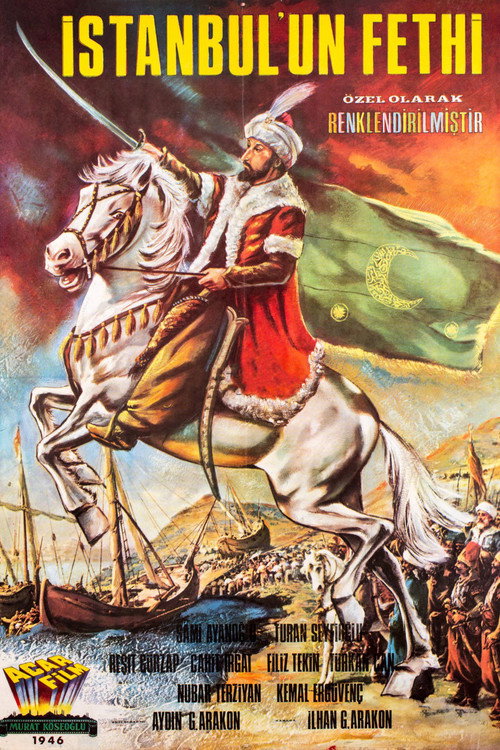
The Giant of Marathon
1959
No user ratings available yet
Representation score: 0.6 out of 10
Representation Score
Minimal
1951
Director
Aydın Arakon
Runtime
95 minutes
Average Rating
No ratings yetNew Showbiz Analysis
The film is a traditional historical epic that prioritizes nationalist storytelling and established power hierarchies. It centers on the macro-level movements of empires and the transition from Roman to Ottoman rule. Representation is limited by the genre's focus on mid-century social norms and military conquest. The narrative reinforces traditional gender roles and focuses on the triumph of one civilization over another. Ultimately, the work lacks contemporary hallmarks of characters who reflect more than one aspect of diversity, opting instead for a patriotic framework centered on imperial expansion and state legitimacy.
Category Breakdown
The film focuses on traditional romantic relationships and military conquest. There is no evidence of LGBTQ+ identities or narratives that question the assumption that everyone is straight or cisgender.
Men play a central role in the military and political spheres. Women primarily serve as reactive plot catalysts or symbols of honor rather than as proactive, independent drivers of the story.
The narrative depicts a clash between Ottoman Turks and Byzantine Romans. This representation is rooted in historical geopolitical conflict rather than a modern perspective that considers multiple aspects of identity.
The film serves as a foundational myth for the Ottoman Empire. It emphasizes state-building, military victory, and the legitimacy of the Sultan’s authority.
There is no discernible mention of characters with physical or neurodivergent disabilities within the narrative.
Present on Screen
Limited or Absent
Official Synopsis
The Turkish Sultan decides to send his armies in war against the remnant of the Roman Empire, Byzantine. All of his advisory council assent to the move with the exception of one aged councilor, who allies himself with the Byzantines, who kidnap the fiancée of the Turkis army leader. The Sultan orders the army leader, along with two others, to proceed to Byzantine for espionage purposes. There, they contact a couple sympathetic to the Turkish cause and, with their home as the base, gather information about the city's defenses. The Byzantines capture the couple and two of the Turks, leaving only the army leader to escape with the vital information. The Turks use it to make an easy conquest, ending the Roman empire, and creating the Ottoman empire.
1959

1944

1990

1954

1954
1966
2012
2007
No reviews yet. Be the first to share your thoughts on this movie!
Use the rating form above to leave a star rating and optional review.