
Hungama
2003
No user ratings available yet
Representation score: 1.8 out of 10
Representation Score
Limited
2002
Director
Manoj Agrawal
Runtime
142 minutes
Average Rating
No ratings yetNew Showbiz Analysis
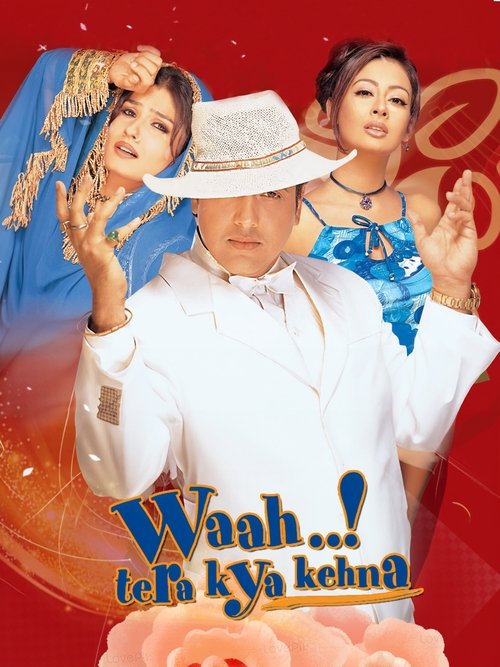
Waah! Tera Kya Kehna is a product of early 2000s commercial cinema that prioritizes traditional storytelling and established social hierarchies. The narrative relies heavily on conventional clichés regarding gender roles and family dynamics. While the film offers culturally authentic representation for its specific target demographic, it does not challenge systemic power dynamics. Instead, it operates within the confines of standard social and narrative norms. The use of disability as a mechanical plot device and the limited ability to act of female characters contribute to a low diversity profile.
Category Breakdown
The film adheres to a traditional structure with no depiction of same-sex relationships or non-cisgender identities. The central romance between Raj and Meena is portrayed through a conventional lens.
Female characters such as Meena and Salma Khan play significant roles but their influence is often tied to male-driven plots. The film relies on traditional gender stereotypes without challenging them.
The cast is predominantly South Asian, avoiding whitewashing by focusing on local identities and social structures. However, it lacks diverse representation.
The story emphasizes traditional family values and the importance of the father-son bond. Conflicts stem from personal greed and moral failings, rather than broader cultural critiques.
Mental instability is used as a plot device to facilitate disinheritance. Neurodivergence is treated as a tool for villainous actions, lacking nuance.
Present on Screen
Limited or Absent
Official Synopsis
Kishan Oberoi has three sons - Dilip, Ashish, and Raj. While Dilip and Ashish are married, Raj (Govinda) is in love with Meena. Kishan does not trust his two elder sons, but trusts Raj, and Raj in turn, is devoted to his dad. One day Raj loses his mind in an accident, and the two elder brothers begin a conspiracy that includes the death of their dad, and the disinheritance of their brother Raj, by declaring him mentally incompetent. Raj mysteriously disappears, and Kishan falls off a building; Murari, a greedy employee of the Oberoi family, brings in a look-alike of Raj, namely Banne Khan (also Govinda), and his wife, Salma Khan, who poses as his nurse, so that Banne Khan and Murari both rule over the Oberoi family, and reap the benefits.
2003
2006
2000

2006
1998
1999

1986

1992
No reviews yet. Be the first to share your thoughts on this movie!
Use the rating form above to leave a star rating and optional review.