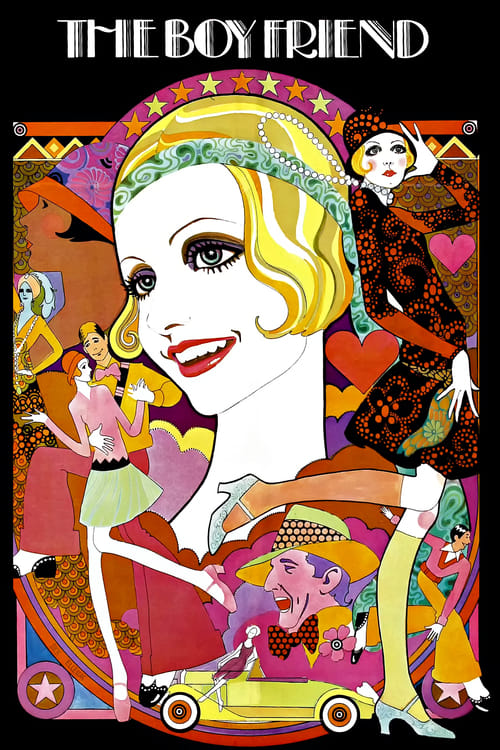
The Boy Friend
1971
No user ratings available yet
Representation score: 2.0 out of 10
Representation Score
Minimal
1966
Director
Philip Saville
Runtime
100 minutes
Average Rating
No ratings yetNew Showbiz Analysis
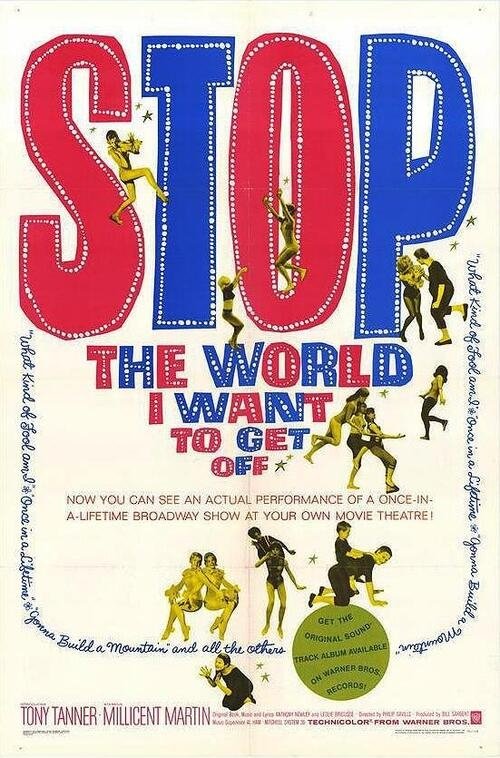
The film opens with a boy in a void, a visual metaphor for the isolation of the individual against the machinery of society. Stop the World — I Want to Get Off is a literal filmization of the Newley/Bricusse stage musical, where the protagonist’s journey is less about physical travel and more about the psychological toll of ambition. The sold meaning is that success is a hollow victory; the protagonist climbs the social ladder only to find his private life in ruins. The camera loves the protagonist’s confusion but does not offer a clear moral escape from it. The film’s argument is that the pursuit of status is a trap, yet the ending does not subvert the desire for that status, leaving the audience with a sense of unresolved tension rather than a definitive critique. The women in the film are interchangeable muses, each representing a different facet of the protagonist’s emotional confusion, but none possess agency beyond their relationship to him. The racial and ethnic landscape is uniformly white, reflecting the insular world of 1960s British theater. The film is a melancholy look at the cost of ambition, but it does not challenge the underlying structures that make that ambition necessary. The last image is not a verdict but a question, leaving the viewer to decide if the boy’s journey was worth the price.
Category Breakdown
No queer characters or same-sex intimacy appear. The narrative remains strictly heterosexual, depicting childhood without sexual identity or non-binary representation.
Millicent Martin plays four female roles, serving as romantic anchors for the male lead. These women function as allegorical milestones in his rise rather than independent agents with their own agency.
The cast is entirely white, reflecting the unmarked Western default of 1960s British musicals. The allegory of success plays out exclusively within a homogeneous, Anglo-centric social sphere.
The film critiques the emptiness of social climbing and the instability of private life. It ultimately validates the pursuit of success and the traditional family unit as the desired endpoint.
No characters with disabilities appear in the narrative. Physical impairment is not a plot point, theme, or source of conflict within the musical’s structure.
Present on Screen
Limited or Absent
Official Synopsis
The Anthony Newley/Leslie Bricusse London and Broadway musical hit Stop the World, I Want to Get Off is given literal treatment in this filmization. Newley stars as Littlechap, whose allegorical rise to success is countered by the instability of his private life. Like the play, the film is staged impressionistically, with Newley decked out in mime makeup and periodically stopping the action to address the audience, and with all the women in his life -- German, American and "Typically English" -- played by a single actress (Millicent Martin, taking over from the stage version's Anna Quayle). In Wizard of Oz fashion, the play itself is lensed in color, while the brief prologue, showing the actors preparing for their performance, is in black-and-white. The production includes such standards (and perennial audition pieces) as What Kind of Fool Am I? and Gonna Build a Mountain.
1971
1941
1969
1967
1975
1963

1980

1958
No reviews yet. Be the first to share your thoughts on this movie!
Use the rating form above to leave a star rating and optional review.