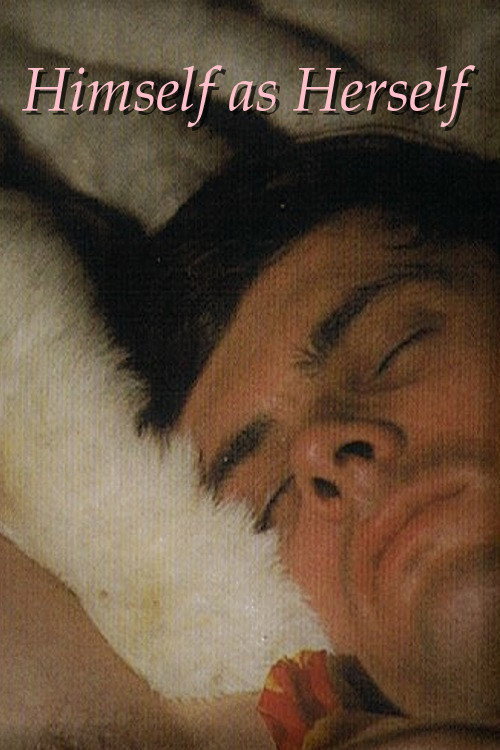
Himself as Herself
1967
No user ratings available yet
Representation score: 8.6 out of 10

Representation Score
Good
1950
Director
Gregory J. Markopoulos
Runtime
24 minutes
Average Rating
No ratings yetNew Showbiz Analysis
Swain opens on a stark, high-contrast frame where a young man stands isolated in a desolate industrial landscape, his face rugged and unpolished against the grainy texture of the film stock. This is not a Hollywood drama but a sociological observation, where the camera treats the protagonist with detached respect rather than romantic softness. The film’s argument is built on a single, powerful refusal: Swain’s ritualized rejection of heterosexuality. As a mysterious woman in white gossamer pursues him through the ruins, the traditional courtship narrative is inverted; she is not a prize to be won, but a force he must escape. The sold meaning is that individual will is insufficient against the cold, indifferent machinery of the modern world. The film’s internal logic supports this existential stasis. There is no rescue, no victory, and no traditional hero’s journey. The environment never pays a price for its dehumanizing effects; it simply is. The ending punishes the expectation of resolution, leaving Swain trapped in his environment. This is a critique of alienation that rejects the soft focus of mainstream cinema in favor of a raw, documentary-like aesthetic. The camera loves the friction between individual agency and structural reality, not the characters themselves. In the context of 1950s experimental film, Swain is a radical departure from the star system, presenting ordinary faces as the primary subjects of a dreamlike narrative. The film’s moral verdict is one of endurance rather than triumph. The intact body at the end is not celebrated for vitality but for its ability to persist in a world that offers no escape. It is a quiet, austere indictment of the limits of the individual in a mechanized age, where the only victory is the refusal to be consumed by the system.
Category Breakdown
Swain’s ritualized rejection of heterosexuality drives the plot, framing male desire as a conscious choice. The woman in white gossamer embodies the default he refuses, yet no explicit same-sex intimacy is shown. Queer identity emerges through resistance and absence rather than positive affirmation.
The woman functions as a narrative force pursuing Swain through ruins, inverting traditional courtship dynamics. Her interiority remains obscured by her symbolic role as the 'other' he must escape. The gender dynamic stays binary and archetypal, lacking nuanced female subjectivity.
The cast features non-professional, working-class figures with unmarked, ordinary faces, rejecting Hollywood glamour. The visual vocabulary is overwhelmingly white, reflecting the unmarked majority of 1950s experimental cinema. Racial identity is absent from the frame, serving as a silent default.
The industrial city is depicted as a dehumanizing, static force that the individual cannot overcome. Traditional romantic and heroic narratives are punished by the film’s existential stasis. The critique of systemic alienation is visual rather than political, observing the environment as a fact.
Bodies on screen are ordinary, working-class, and physically present in a material space without medicalization. No disabled characters or impairments are depicted, making the category effectively absent. The film focuses on physical endurance rather than specific disability experiences.
Present on Screen
Limited or Absent
Official Synopsis
Swain is inspired by Nathaniel Hawthorne’s Fanshawe, features a dreamlike narrative of a young man’s ritualized rejection of heterosexuality, as a mysterious woman in white gossamer pursues him through a ruined landscape.
1967

1950

1963
1972
1967
1948
1967
1951
No reviews yet. Be the first to share your thoughts on this movie!
Use the rating form above to leave a star rating and optional review.