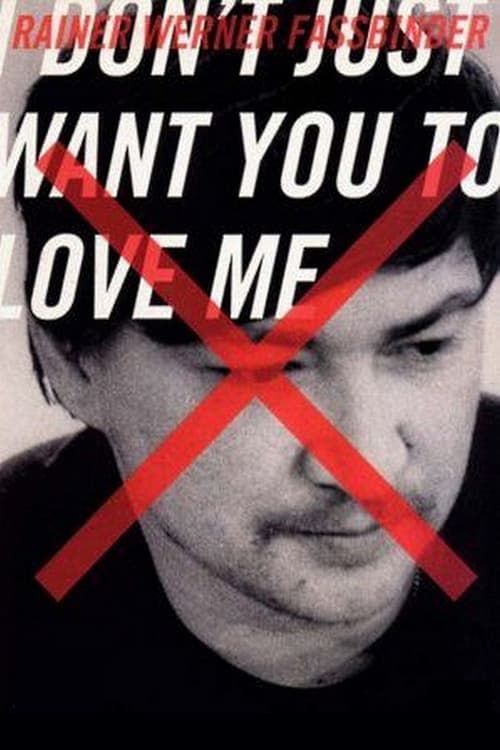
I Don’t Just Want You to Love Me
1992
No user ratings available yet
Diversity score: 7.0 out of 10
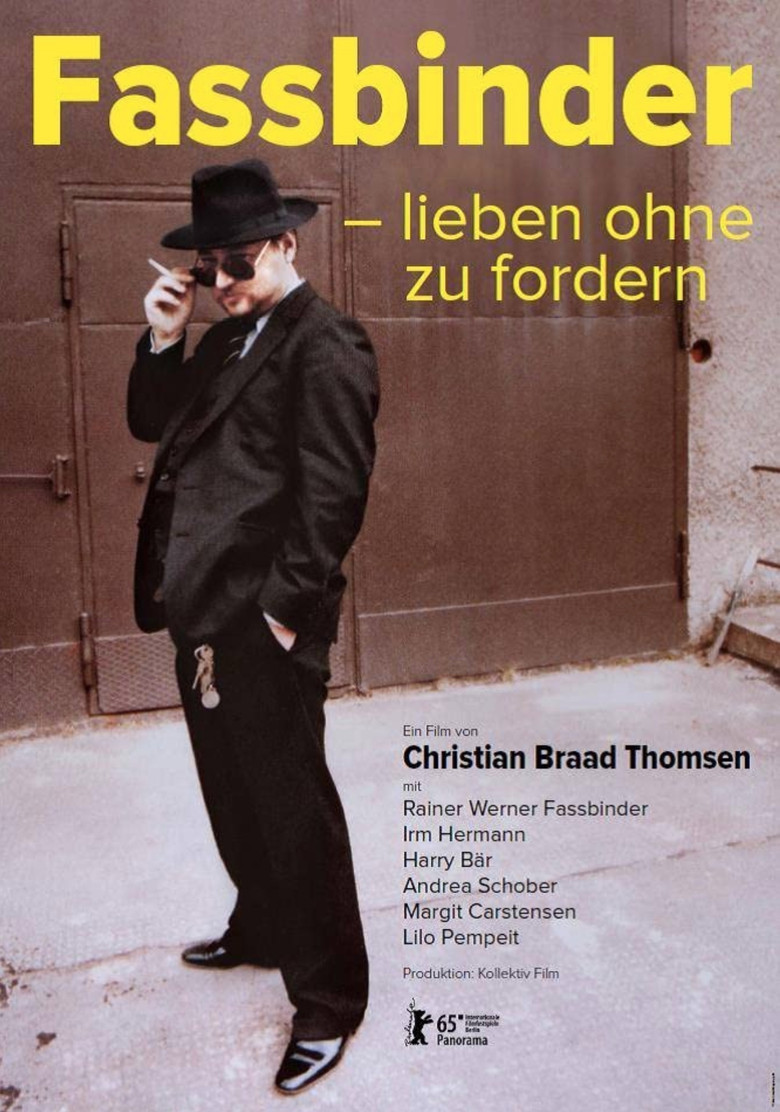
2015
Director
Christian Braad Thomsen
Runtime
109 minutes
Average Rating
No ratings yetSynopsis
Rainer Werner Fassbinder was probably Germany’s most significant post-war director. His swift and dramatic demise at the early age of 37 in 1982 left behind a vacuum in European filmmaking that has yet to be filled, as well as a body of unique, multi-layered, and multifarious work of astonishing consistency and rigour. From 1969 onwards, Danish director and film historian Christian Braad Thomsen maintained a close yet respectfully distanced friendship with Fassbinder. The film is based on his personal memories as well as a series of conversations and interviews he held with Fassbinder and his mother, Lilo, in the 1970s.
Overall Score
Good
Category Breakdown
LGBTQ+ Representation
The documentary centers on queer identities and non-heteronormative lifestyles. It explores how same-sex intimacy and the rejection of cisnormative structures were foundational to Fassbinder's cinematic legacy.
Gender Representation
The film examines the performative nature of gender and power imbalances in relationships. It highlights Fassbinder's preoccupation with gendered oppression and the subversion of domestic stability.
Racial & Ethnic Diversity
The subjects remain largely homogeneous due to the biographical focus on a German filmmaker. However, the film analyzes how Fassbinder's work utilized diverse bodies to critique social structures.
Religious & Cultural Diversity
The narrative critiques bourgeois morality and traditional Western institutions like the nuclear family. It celebrates a form of anti-social liberation and the deconstruction of established social norms.
Disability Representation
The film addresses the psychological complexities and addiction realities of the subject's life. It treats mental and emotional struggles as inextricable parts of his creative and existential identity.
Strengths
Areas for Improvement
AI Analysis
This documentary offers a sophisticated examination of identity politics by deconstructing the life and work of Rainer Werner Fassbinder. It excels in its deep dive into queer themes and the subversion of traditional gender hierarchies, providing a rich look at how art challenges social orders. While the film's subject matter frequently engages with marginalized identities and the critique of systemic norms, the documentary itself remains somewhat homogeneous in its primary cast. The focus is heavily centered on the German cinematic context and the personal history of the filmmaker. Ultimately, the film succeeds as a meta-textual study of rebellion. It moves beyond simple biography to explore how personal volatility and artistic radicalism can disrupt conventional expectations of morality and authority.
1992

2015
2022
2006
2010

2000

2019

2014
2015
2017
1989
2017
No reviews yet. Be the first to share your thoughts on this movie!
Use the rating form above to leave a star rating and optional review.