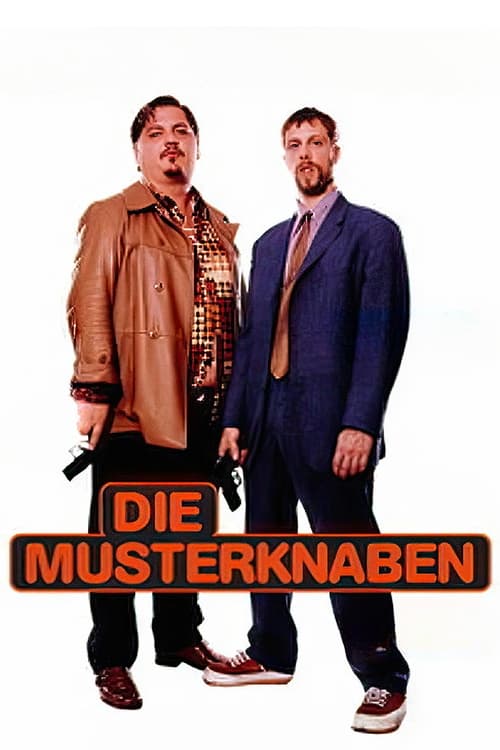
Die Musterknaben
1997
No user ratings available yet
Representation score: 3.7 out of 10

Representation Score
Limited
2009
Director
Udo Witte
Runtime
89 minutes
Average Rating
No ratings yetNew Showbiz Analysis
Die Blücherbande is a traditional genre comedy that adheres to well-established cinematic conventions. While it breaks from tradition by placing a woman in a position of authority, it does not delve into broader social issues. The film’s narrow focus on the conflict between a criminal and law enforcement limits its exploration of diverse identities. The story primarily revolves around the cat-and-mouse game between Werner Blücher and Inspector Schmitz-Kesselhoff. This limited narrative scope results in a lack of multi-layered depth, as the story does not explore various racial, cultural, or LGBTQ+ identities. Ultimately, the film functions as a standard procedural comedy, relying on familiar social structures and comedic archetypes without challenging systemic hierarchies or providing a diverse portrayal of human experiences.
Category Breakdown
The film does not include any explicit references to LGBTQ+ characters or non-straight relationships. The story focuses mainly on the conflict between a criminal and law enforcement.
Chief Inspector Schmitz-Kesselhoff challenges traditional gender roles by serving as the authoritative female antagonist to a male protagonist. However, the inclusion of a comical sidekick reinforces certain comedic stereotypes.
The story unfolds in a culturally uniform setting within the context of a German crime comedy. There is no indication of a racially diverse cast.
The plot follows a conventional 'cops and robbers' storyline driven by state institutions. It does not address any anti-capitalist or anti-Western critiques.
No visible or hidden disabilities are portrayed among the main characters. There is no mention of neurodivergence or physical disabilities.
Present on Screen
Limited or Absent
Official Synopsis
Werner Blücher is what you'd call a real thoroughbred crook: not a second seems to go by without the cunning rascal coming up with an idea for the next coup. It's just too bad that Blücher's criminal career hasn't been too successful so far - his lawyer has just got him out of prison once again. And although his arch-enemy, the fanatical chief inspector Schmitz-Kesselhoff, is doing everything she can together with her dotty assistant Müller Zwo to get Blücher out of circulation once and for all, the gallant crook is already planning the next thing.
1997

2013

2013

2000

2003

2009

2010

2018
No reviews yet. Be the first to share your thoughts on this movie!
Use the rating form above to leave a star rating and optional review.