
Dangerous Minds
1995
No user ratings available yet
Representation score: 7.4 out of 10
Representation Score
Limited
1988
PGDirector
Ramón Menéndez
Runtime
103 minutes
Average Rating
No ratings yetNew Showbiz Analysis
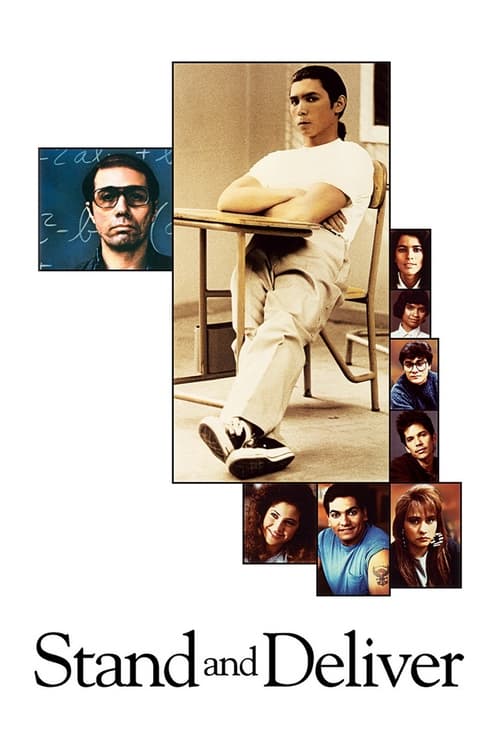
Stand and Deliver offers a powerful look at the Latino experience in the 1980s, providing a sophisticated view of the Mexican-American community. By focusing on Jaime Escalante, the film grants a significant role in driving the story to its Mexican-American characters, disrupting typical Hollywood narratives. However, the film’s scope is limited to masculine struggles and a patriarchal hierarchy, relegating female students to secondary roles and excluding LGBTQ+ identities. This creates a traditional social structure that contrasts with its progressive racial themes. Ultimately, the film is a dual-natured work. While it challenges institutional biases in educational testing, it adheres to conventional gender hierarchies and social norms.
Category Breakdown
The film focuses on the social structures of East Los Angeles but does not include non-cisgender identities or challenge the assumption that everyone is straight.
The story centers around a male teacher mentoring male students, with female students appearing in secondary roles without challenging traditional gender roles.
The film highlights a Mexican-American cast and a non-white protagonist, showing a community of color with strong ability to act, intelligence, and complexity despite systemic barriers.
It critiques biased institutions like the Educational Testing Service but emphasizes meritocracy and academic discipline as tools for social mobility within existing frameworks.
There are no prominent depictions of physical or neurodivergent disabilities that serve as central character arcs or plot drivers.
Present on Screen
Limited or Absent
Official Synopsis
Jaime Escalante is a mathematics teacher in a school in a hispanic neighbourhood. Convinced that his students have potential, he adopts unconventional teaching methods to try and turn gang members and no-hopers into some of the country's top algebra and calculus students.
1995
1967

1989

2012
1989

1955

2007

1999
No reviews yet. Be the first to share your thoughts on this movie!
Use the rating form above to leave a star rating and optional review.