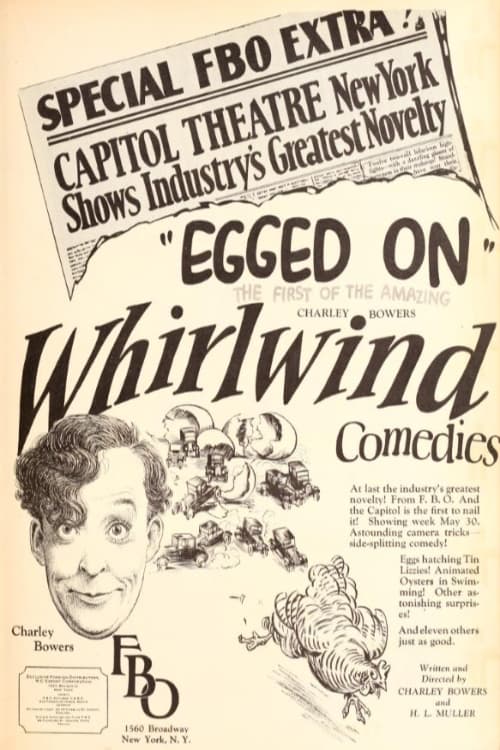
Egged On
1926
No user ratings available yet
Representation score: 0.9 out of 10
Representation Score
Minimal
1926
Director
Harold L. Muller, Charles R. Bowers
Runtime
24 minutes
Average Rating
No ratings yetNew Showbiz Analysis
He Done His Best is a product of the 1920s silent era, emphasizing slapstick comedy and physical humor over sociopolitical depth. The narrative relies on conventional romantic and class-based conflict clichés, rather than exploring multi-layered themes. While the film introduces themes of labor relations and collective action through a kitchen staff strike, these elements serve as comedic devices. The focus remains on traditional storytelling structures and technological optimism. Ultimately, the film lacks the intentionality needed to challenge social hierarchies, reflecting the homogeneous casting and rigid gender norms of its time.
Category Breakdown
The film follows a traditional heterosexual relationship between the main characters. There are no representations of LGBTQ+ identities or critiques of the assumption that everyone is straight or cisgender.
Gender roles in the film follow the social hierarchy of the 1920s. The female lead's role is defined by her father's approval, acting as a gatekeeper to patriarchal permission.
The story focuses on class conflict and romance. There are no mentions of a diverse cast or non-Anglo-Saxon characters.
The story explores labor relations through a kitchen staff strike. It emphasizes technological optimism via a 'great invention' plot device.
The film does not include any characters with visible or invisible disabilities.
Present on Screen
Limited or Absent
Official Synopsis
When Charley asks a young woman whom he is in love with to marry him, she tells him that he needs to get her father's consent. But when Charley then goes to see her father, who owns a restaurant, he ends up getting hired as a dishwasher instead. The rest of the kitchen staff soon find out that Charley is not a member of their union, and they go on strike. Charley is left by himself, leading to a series of upheavals in the restaurant, and a great invention.
1926
1933
1926
1932
1917
1924
1920
1914
No reviews yet. Be the first to share your thoughts on this movie!
Use the rating form above to leave a star rating and optional review.