
Cat Shit One
2010
No user ratings available yet
Representation score: 3.0 out of 10
Representation Score
Fair
2016
TV-14Director
Léa Dozoul, Guillaume Auberval, Hugo Lagrange, Antoine Laroye, Timothé Hek, David Lashcari
Runtime
4 minutes
Average Rating
No ratings yetNew Showbiz Analysis
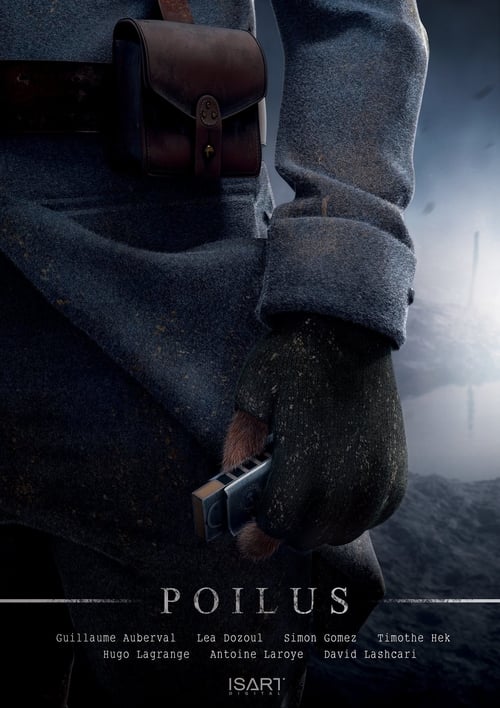
Poilus is a focused, character-driven film that uses anthropomorphic animals to explore themes of war and impending violence. By using a hare as the protagonist, the film employs an allegorical framework that can bypass traditional human-centric racial and gender stereotypes. However, the film maintains a neutral stance on diversity. It lacks specific markers of progressive disruption, such as queer narratives or diverse gender roles, but it also avoids reinforcing traditionalist clichés through its use of animal characters. Ultimately, the work functions as a somber exploration of conflict rather than a vehicle for complex diversity or systemic subversion.
Category Breakdown
The film does not include any explicit representations of LGBTQ+ identities or non-straight relationships. It focuses solely on Ferdinand's personal journey before entering combat, without addressing queer narratives.
The story revolves around a single male protagonist. With no diverse cast of characters, the film neither reinforces nor challenges traditional gender roles.
Using anthropomorphic animals, the film potentially symbolizes ethnic diversity by avoiding human-specific traits. However, it does not provide a detailed cast of diverse species.
The setting emphasizes the harsh realities of war and existential struggles. There is no clear indication of anti-establishment or anti-religious sentiments in the narrative.
There is no depiction of physical, sensory, or neurodivergent disabilities in this work.
Present on Screen
Limited or Absent
Official Synopsis
A young hare named Ferdinand is playing the harmonica before the battle. Soon the signal for attack will be given, and Ferdinand will face the terrible enemy on the battlefield.
2010

2018
2015
2022
2015

2005
1944
2017
No reviews yet. Be the first to share your thoughts on this movie!
Use the rating form above to leave a star rating and optional review.