
Everyone Is There
2020
No user ratings available yet
Representation score: 8.4 out of 10
Representation Score
Excellent
2023
Director
Lim Oh-jeong
Runtime
109 minutes
Average Rating
No ratings yetNew Showbiz Analysis
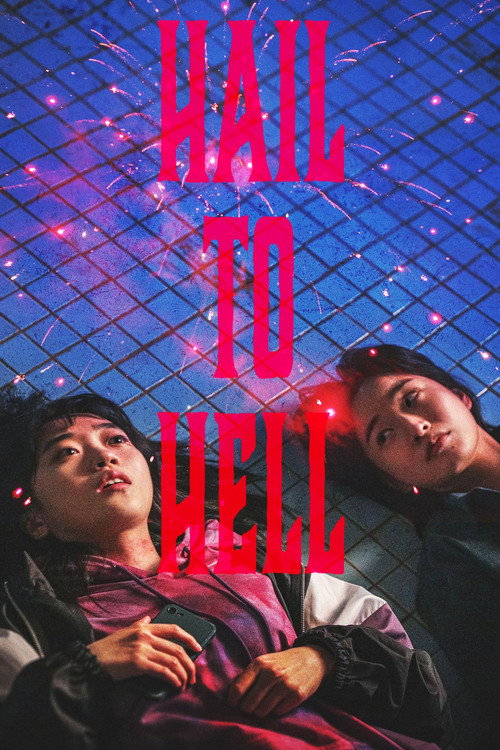
Hail to Hell succeeds in its thematic deconstruction of social hierarchies and the psychological toll of systemic exclusion. By centering on underrepresented students, the film provides a meaningful look at how institutional pressures drive individuals toward crisis. However, the film's impact is somewhat limited by a lack of explicit representation regarding LGBTQ+ identities. While the focus on outcasts provides a foundation for subtext, the absence of clear queer narratives prevents a higher score in that category. Ultimately, the film's strength lies in its refusal to romanticize trauma. It presents a complex, ability to act-driven look at mental health and the reclamation of power by those pushed to the fringes of society.
Category Breakdown
The film does not explicitly confirm any LGBTQ+ identities or relationships. While it focuses on social outcasts, there is no direct on-screen evidence of LGBTQ+ representation.
women's ability to drive the story drives the plot as Na-mi and Sun-woo reclaim power from their bullies. The story centers on the psychological complexity of these women, challenging clichés of female passivity.
As a South Korean production, the film operates within a culturally specific framework. The cast reflects the regional origin, using the Korean school system to explore social stratification.
The film offers a sharp critique of institutional structures and social hierarchies. It examines how modern success metrics and popularity can act as oppressive forces within a community.
The narrative engages deeply with invisible disabilities, specifically mental health struggles and suicidal ideation. It avoids typical inspiration clichés, focusing instead on the gritty reality of psychological distress.
Present on Screen
Limited or Absent
Official Synopsis
Na-mi and Sun-woo, the outcasts in school, plan to commit suicide instead of going to the school trip. On the moment of success, they find out that the girl, Chae-lin, who made their lives miserable is living a new happy life in Seoul. So, they decide to make revenge before ending their lives. However, when they finally spot Chae-lin, they see a good-hearted girl in front of them which makes their plans go awry.
2020
1999

2014

2014
2017
2003
2016

2010
No reviews yet. Be the first to share your thoughts on this movie!
Use the rating form above to leave a star rating and optional review.