
The End of the Line
1957
No user ratings available yet
Representation score: 1.4 out of 10
Representation Score
Minimal
1954
Director
Don Chaffey
Runtime
64 minutes
Average Rating
No ratings yetNew Showbiz Analysis
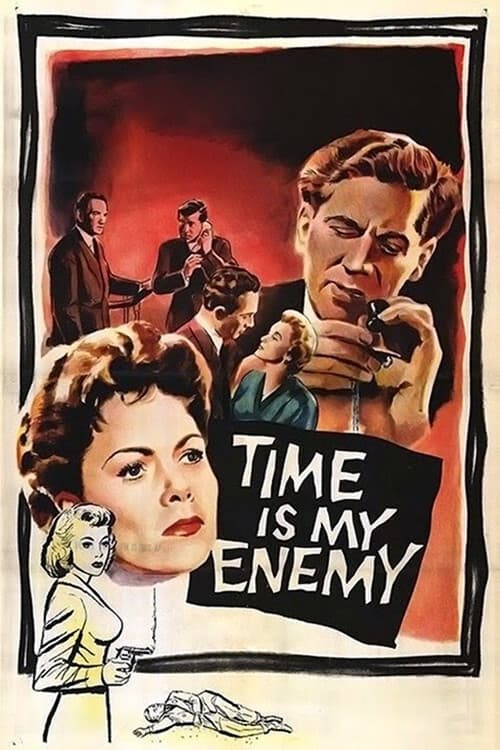
Time Is My Enemy is a conventional mid-century crime drama that centers on domestic instability. The narrative structure relies on the tension between a married woman and a figure from her past, a common formula in 1950s melodrama. The film primarily reinforces traditional social norms regarding marriage and the nuclear family. It lacks the complexity or systemic critique necessary to move beyond a standard genre piece. Because the story focuses on a singular, homogeneous domestic conflict, it offers little in the way of diverse representation or social subversion.
Category Breakdown
The film focuses on a heterosexual marriage and a former husband. There is no evidence of non-straight relationships or queer themes.
A female protagonist drives the central conflict, providing visibility. However, the plot relies on blackmail clichés that position her as a reactive subject to male antagonists.
The available information shows no indication of a diverse or non-Anglo-Saxon cast. The production aligns with standard mid-century Western casting norms.
The narrative emphasizes preserving a stable nuclear family. It reinforces traditional Western social institutions and conventional morality rather than exploring alternative cultural perspectives.
There is no mention of characters navigating physical, sensory, or neurodivergent experiences within the story.
Present on Screen
Limited or Absent
Official Synopsis
A happily-married woman is blackmailed by her first husband, who she wrongly believed was killed in the Blitz.
1957
1939
1949
1950
1956
1943
1951
1950
No reviews yet. Be the first to share your thoughts on this movie!
Use the rating form above to leave a star rating and optional review.