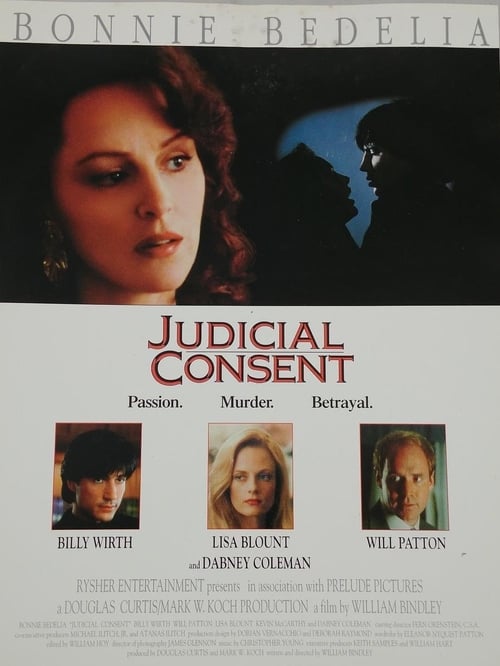
Judicial Consent
1994
No user ratings available yet
Representation score: 2.5 out of 10

Representation Score
Good
1999
RDirector
Allan A. Goldstein
Runtime
91 minutes
Average Rating
No ratings yetNew Showbiz Analysis
When Justice Fails operates primarily within the conventional clichés of the late 1990s thriller genre. It achieves moderate inclusion by centering a woman in a position of legal power and featuring an actor with a disability in a lead role. However, the film lacks systemic subversion or diverse casting. The narrative remains largely within standard demographic norms, offering little in the way of racial or LGBTQ+ representation. While it engages with complex moral questions regarding justice, it does not push beyond traditional storytelling boundaries.
Category Breakdown
The film does not include any explicit LGBTQ+ characters or non-cisgender identities. The story revolves around a detective and a district attorney without addressing queer identities.
A female lead holds significant legal authority as a district attorney. This role allows her to play a central and influential part in driving the story.
The cast follows traditional Western thriller demographics of the late 1990s. There is no indication of a diverse or non-white majority ensemble.
The story explores subjective morality and the ethics of punishing sex offenders. It questions institutionalized legal morality but does not provide broader institutional critiques.
The casting of Marlee Matlin provides meaningful representation. Her presence as a actively leading professional contributes to a more inclusive depiction of capability.
Present on Screen
Limited or Absent
Official Synopsis
A detective (Jeff Fahey) investigating the murders of two sex offenders gets involved with a beautiful district attorney (Marlee Matlin) who becomes a main suspect.
1994
1987

1999

1992

1994
1990

2004
1987
No reviews yet. Be the first to share your thoughts on this movie!
Use the rating form above to leave a star rating and optional review.