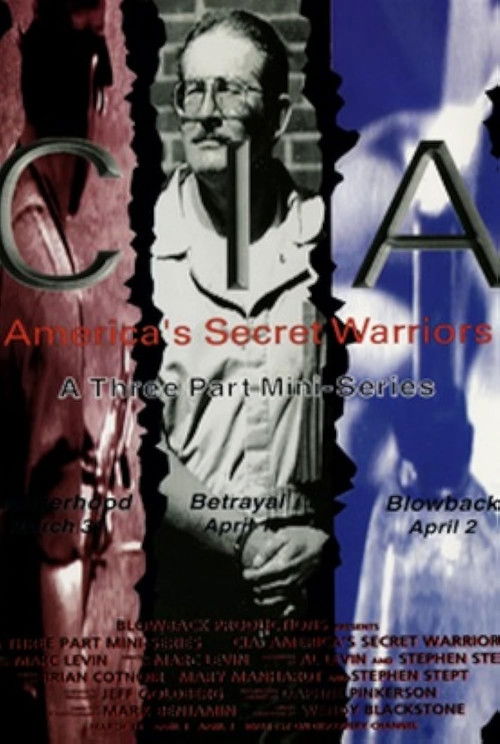
CIA - America's Secret Warriors
1997
No user ratings available yet
Representation score: 2.2 out of 10
No Poster Available
Representation Score
Minimal
2007
NOT RATEDDirector
Philippe Diaz
Runtime
52 minutes
Average Rating
No ratings yetNew Showbiz Analysis
The film serves as a specialized political critique rather than a broad exercise in demographic inclusivity. While it excels at deconstructing Western institutional power and state-sanctioned narratives, it lacks multi-layered depth. The documentary is heavily weighted toward a singular male perspective within the context of high-level government policy. This focus limits the presence of diverse racial, ethnic, and gendered voices. Ultimately, the work prioritizes systemic political critique over demographic variety, resulting in a profile that is culturally subversive but demographically narrow.
Category Breakdown
The documentary focuses on a biographical and political study of a former CIA analyst. It does not include any LGBTQ+ characters or themes related to non-straight identities.
The narrative centers on the professional experiences of Ray McGovern. It lacks women's ability to drive the story and remains focused on a singular male perspective within a male-dominated institution.
The film examines U.S. intelligence and government policy. It does not feature a diverse cast or utilize non-white perspectives to drive the narrative.
The film offers a strong critique of Western dominance and institutional integrity. It challenges the CIA and U.S. government through an anti-establishment framework.
There is no evidence that neurodivergence, physical disabilities, or mental health conditions are addressed as narrative devices in this work.
Present on Screen
Limited or Absent
Official Synopsis
Having served as a CIA analyst for 27 years, Ray McGovern speaks candidly about the creation of the Agency, the deceit that lead to the invasion of Iraq, the questionable character of George Tenet, and more. In stark frankness, McGovern examines the politicization of the Central Intelligence Agency and how it came to be an entity that serves the White House agenda, instead of one that serves up the unbiased truth. Disgusted by the lack of integrity exhibited by members of the intelligence community and U.S. government, McGovern retired and eventually co-created VIPS (Veteran Intelligence Professionals for Sanity)-an organization dedicated to exposing the mishandling of important intelligence, particularly with regard to the War on Iraq. Full of inside information you have never heard before about the way in which our nation's most secretive agency operates.
1997
2012

2018
2020
2009

2012
2015
2005
No reviews yet. Be the first to share your thoughts on this movie!
Use the rating form above to leave a star rating and optional review.