Find another title
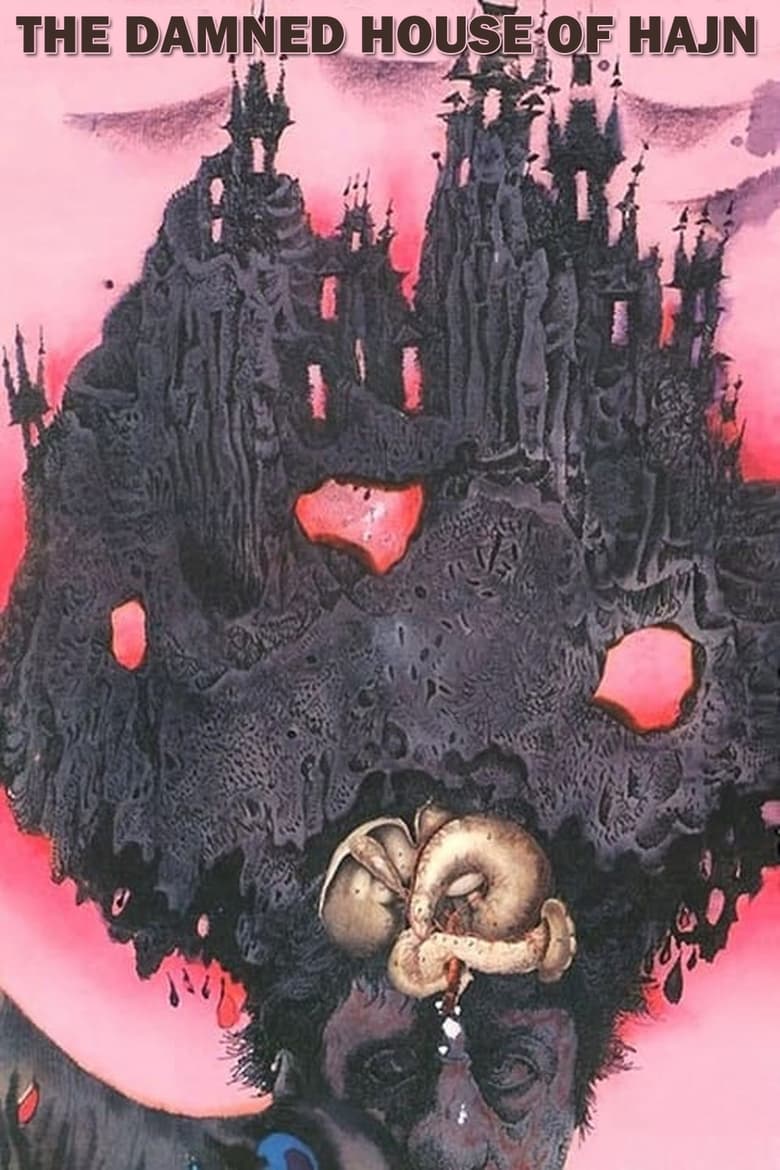
The Damned House of Hajn
1989
Director
Jiří Svoboda
Runtime
107 minutes
Average Rating
No ratings yetSynopsis
Sonya is the heiress to the riches of a Czech noble family—the Hajns. Petr, a social climber marries her, ignoring some shady goings-on—in particular, an insane uncle who prowls the mansion believing himself invisible, a peccadillo the family indulges. The uncle’s stalking every corner of the house, popping out of cupboards and out from behind curtains slowly takes its toll on the young bride.
Where to Watch
Diversity & Representation
Overall Score
Limited
Category Breakdown
LGBTQ+ Representation
The film lacks explicit LGBTQ+ characters or narratives. The central plot focuses on a traditional marriage between Sonya and Petr, offering no visible critique of heteronormativity.
Gender Representation
Sonya is an heiress who becomes a victim of her domestic environment. While the film utilizes the 'distressed bride' trope, her psychological struggle provides some character depth.
Racial & Ethnic Diversity
Set within a specific Czech noble lineage, the cast appears homogeneous. There is no evidence of ethnic blending or diverse racial representation within this historical context.
Religious & Cultural Diversity
The narrative disrupts the idea of the stable family by portraying the Hajns as a dysfunctional, secretive unit. It critiques the corruption inherent in closed social hierarchies.
Disability Representation
The uncle's insanity serves primarily as a horror device to create suspense. His mental health condition is used as a catalyst for terror rather than a nuanced exploration.
Strengths
- The film offers a cynical critique of inherited privilege and the corruption of noble social hierarchies.
- The psychological toll on the female protagonist provides depth beyond simple passivity.
Areas for Improvement
- The narrative uses mental illness primarily as a tool for horror and suspense.
- The cast lacks racial and ethnic diversity, reflecting a homogeneous historical setting.
- There is a lack of LGBTQ+ representation or non-cisnormative narratives.
AI Analysis
The film operates within the confines of traditional European gothic tropes, focusing on psychological decay and inherited social structures. It prioritizes atmospheric suspense over modern intersectional complexity. While the story avoids portraying an idealized family, it remains limited by a homogeneous cast and a reliance on character archetypes. The representation of mental health is functional for the thriller genre rather than being character-driven. Ultimately, the work is a period-adjacent drama that explores systemic decay through a narrow, traditional lens, lacking intentional demographic diversification.
Rate this Movie
Reviews
No reviews yet. Be the first to share your thoughts on this movie!
Use the rating form above to leave a star rating and optional review.