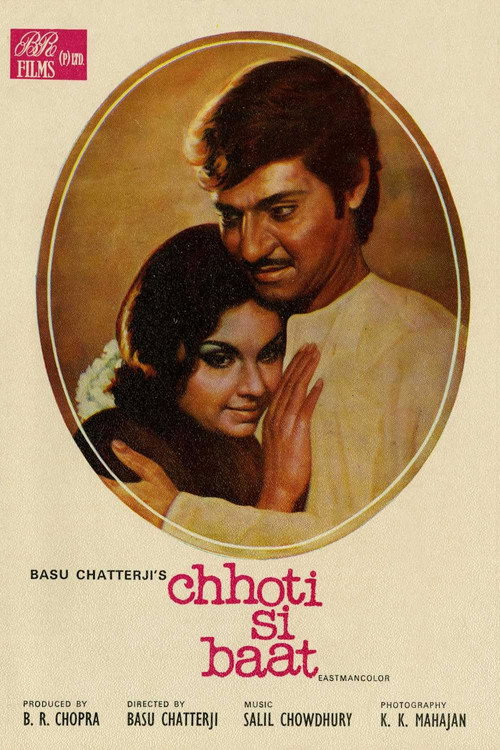
Chhoti Si Baat
1976
No user ratings available yet
Representation score: 3.6 out of 10
Representation Score
Fair
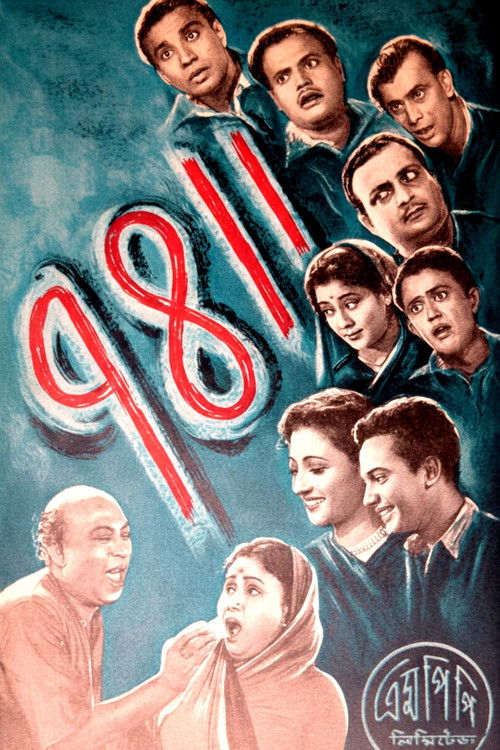
1953
Director
Nirmal Dey
Runtime
97 minutes
Average Rating
No ratings yetNew Showbiz Analysis
Sharey Chuattar is a period-specific social comedy-drama that uses a disruption of institutional boundaries to drive its plot. By placing a female character in a boys' hostel, the film explores the tension between individual actions and rigid social norms. The film succeeds in presenting a localized, non-Western perspective, grounding the story in Bengali cultural life. This provides a meaningful representation of regional identity that stands apart from Western cinematic norms. However, the film remains limited by the social frameworks of 1953. It lacks LGBTQ+ representation and provides no evidence of disability inclusion, likely adhering to the traditional moral structures of its era.
Category Breakdown
The film does not include any characters with non-binary genders or same-sex relationships. It operates within the assumption that everyone is straight or cisgender, typical of mid-century South Asian cinema.
The plot centers on a woman entering a male-dominated hostel, suggesting a challenge to traditional gender roles. This setup allows for exploring the role of women against patriarchal structures.
As a Bengali production, the film centers on a South Asian identity. It offers a localized cultural perspective that resists Western cinematic dominance by focusing on indigenous social structures.
The story explores the complexities of communal living and social regulation. It examines the tension between established communal rules and the disruption of traditional order.
There is no indication of characters with physical or neurodivergent disabilities within the narrative or historical record.
Present on Screen
Limited or Absent
Official Synopsis
The owner of Annapurna boarding house facing an upcoming trouble for let in a girl in the boys hostel.
1976

1959
1990
2011
2011
1981
2003

2016
No reviews yet. Be the first to share your thoughts on this movie!
Use the rating form above to leave a star rating and optional review.