
A Man and a Woman
1966
No user ratings available yet
Representation score: 4.2 out of 10
Representation Score
Limited
1989
Director
René Féret
Runtime
127 minutes
Average Rating
No ratings yetNew Showbiz Analysis
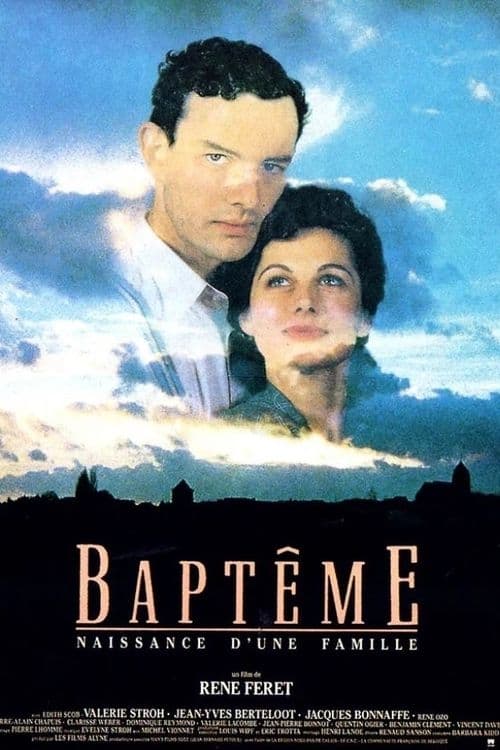
Baptême is a personal, semi-autobiographical period drama that focuses on intimate family dynamics rather than broad societal issues. It highlights the proactive ability to act of a female protagonist navigating social constraints. However, the film operates within a conventional framework that assumes everyone is straight and cisgender, focusing on a narrow demographic context in northern France. Despite a lack of diversity in race and sexual orientation, it offers a meaningful challenge to traditional gender roles.
Category Breakdown
The film depicts a heterosexual relationship between Aline and Pierre, with no same-sex intimacy or non-conforming gender identities.
Aline challenges mid-20th century gender roles by taking control of her life. She proposes marriage and uses strategic deception to overcome parental authority.
The film is set in a 1935 northern French mining town, reflecting the homogeneous demographics of the time. The story centers on a localized, white European working-class experience.
The story examines the conflict between personal desires and traditional family structures. It emphasizes personal emotional truth over strict adherence to social norms and parental control.
There are no disabilities that play a central role in the characters' stories or the plot development.
Present on Screen
Limited or Absent
Official Synopsis
In this film, director Rene Feret tells the story of his parents' lives. In 1935 his mother Aline works in her parents' cafe in a mining town in northern France. There, she meets a customer, Pierre and decides she is going to marry him. In a reversal of roles, she is the one who proposes to him, and she also engineers a false pregnancy to persuade her parents to okay the match. With a few stops along the way, the story picks up after the war with the birth of the couple's third son, who is given the name Rene in memory of their first, dead son. Never rich, they achieve some level of financial stability just as their sons are about to head off to the city for college. The love between the two older people is highlighted in a poignant scene as, just as he is about to die, the father shares a champagne toast with his wife in memory of one of their happier moments.
1966

1995

1986

1956
1992

2010

1964

1973
No reviews yet. Be the first to share your thoughts on this movie!
Use the rating form above to leave a star rating and optional review.