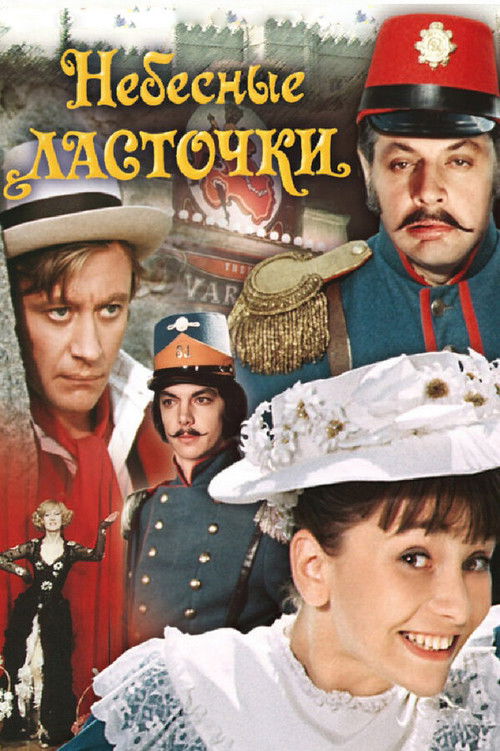
Heavenly Swallows
1976
No user ratings available yet
Representation score: 3.5 out of 10
Representation Score
Fair
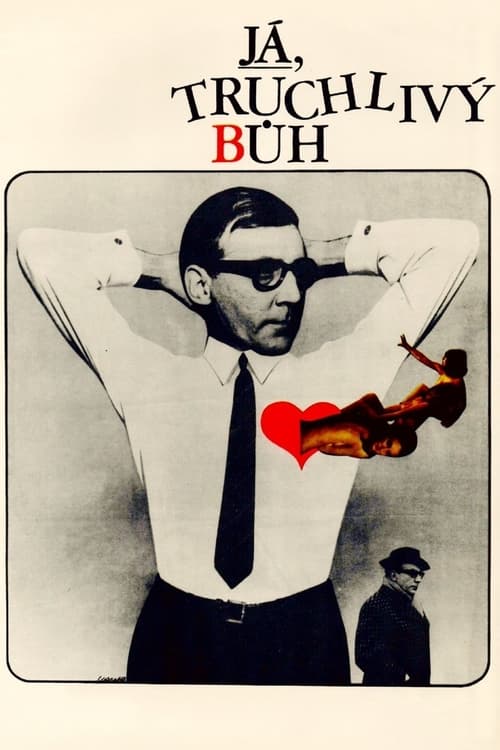
1969
Director
Antonín Kachlík
Runtime
82 minutes
Average Rating
No ratings yetNew Showbiz Analysis
The film operates as a mid-century dramedy that uses comedic clichés to explore social performance and deception. It excels in using an outsider to disrupt established social manners and romantic hierarchies. While the narrative introduces ethnic diversity through the Greek character, it remains primarily focused on traditional romantic structures. The emphasis on individualistic deception prevents the film from delving into a deeper or more systemic exploration of cultural or social power dynamics. Ultimately, the work offers a moderate level of representation by challenging gendered expectations and introducing cross-cultural exchange, even if it lacks multi-layered complexity.
Category Breakdown
The story focuses on heterosexual relationships and the pursuit of romantic interest from women. There is no depiction of queer relationships or non-binary identities.
Janicka plays a significant role by rejecting the protagonist based on her own criteria. The plot also examines masculinity as a constructed performance rather than an inherent trait.
The inclusion of Apostolek, a Greek partisan, introduces ethnic diversity. His outsider status disrupts local social hierarchies and etiquette.
The film critiques performative social institutions through the lens of a fabricated identity. However, it emphasizes individual revenge over systemic cultural critique.
The narrative contains no mention of characters dealing with physical, sensory, or neurodivergent conditions.
Present on Screen
Limited or Absent
Official Synopsis
Adolf, the irresistible seducer of women, is fond of Janicka, a novice opera singer. The girl, however, prefers famous men and Adolf thus does not have a single chance with her. One day in a hospital, he meets a Greek partisan named Apostolek who impresses him with his spontaneity and ease in solving all problems, especially those with women. Adolf has an idea for a revenge. He makes Apostolek familiar with social manners, dresses him after the latest fashion and introduces him to Janicka as a Greek conductor. Janicka instantly falls in love with the made-up composer and Apostolek does no better.
1976
1967

1972

1965

2002
1959

1965

1974
No reviews yet. Be the first to share your thoughts on this movie!
Use the rating form above to leave a star rating and optional review.