Shoplifters
2018
No user ratings available yet
Representation score: 8.0 out of 10
Representation Score
Limited
2019
RDirector
Bong Joon Ho
Runtime
133 minutes
Average Rating
No ratings yetNew Showbiz Analysis
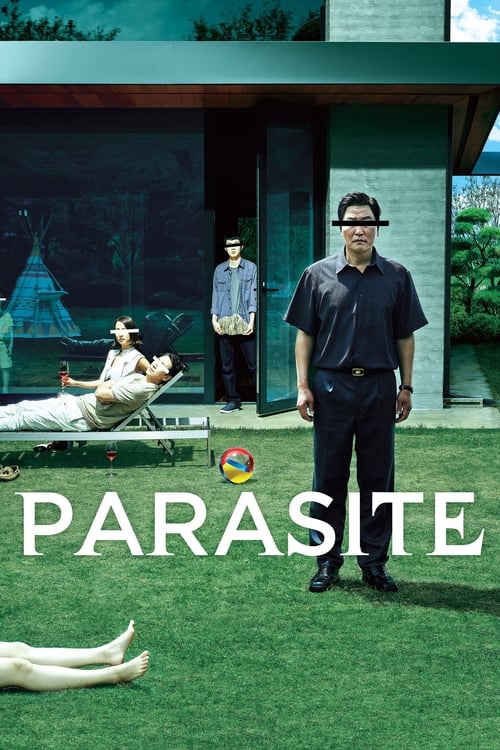
Parasite opens with a poor family sitting in a rich basement. The boy imagines he will buy the house. The film treats the "smell" of poverty as an intractable marker that money cannot buy away, framing class as a biological reality rather than a circumstance. The wealthy are "nice" but their niceness is a byproduct of privilege, not moral virtue. The closing image of the boy staring at the hilltop house suggests the cycle of oppression is inescapable.
Category Breakdown
No same-sex couples, queer identities, or non-binary characters appear in the film. Romantic and sexual dynamics are strictly heterosexual between the Park and Kim family members.
Women function as strategic assets or moral anchors; men are the primary agents of violence or deception. Ki-jung’s relationship with the hidden husband is portrayed as genuine, contrasting with her parents’ transactional approach. The wealthy father is passive and oblivious, while the poor father’s competence is revealed only through deception.
The cast is entirely Korean, reflecting the film’s specific Seoul setting. No non-white characters appear, and the narrative focuses on internal class dynamics rather than cross-cultural or racial interactions.
Wealth is framed as an unearned privilege that enables obliviousness, while poverty is treated as a biological stain. The vertical hierarchy of housing—hilltop versus semi-basement—serves as the central metaphor for inescapable social stratification. The film critiques the nuclear family’s role in maintaining these class boundaries.
No characters are depicted with physical, sensory, or cognitive disabilities. The film’s focus on bodily markers relates to class (smell, hygiene) rather than impairment or disability.
Present on Screen
Limited or Absent
Official Synopsis
All unemployed, Ki-taek's family takes peculiar interest in the wealthy and glamorous Parks for their livelihood until they get entangled in an unexpected incident.
2018

2019

2013

2000
2009
2020

2019
2019
No reviews yet. Be the first to share your thoughts on this movie!
Use the rating form above to leave a star rating and optional review.