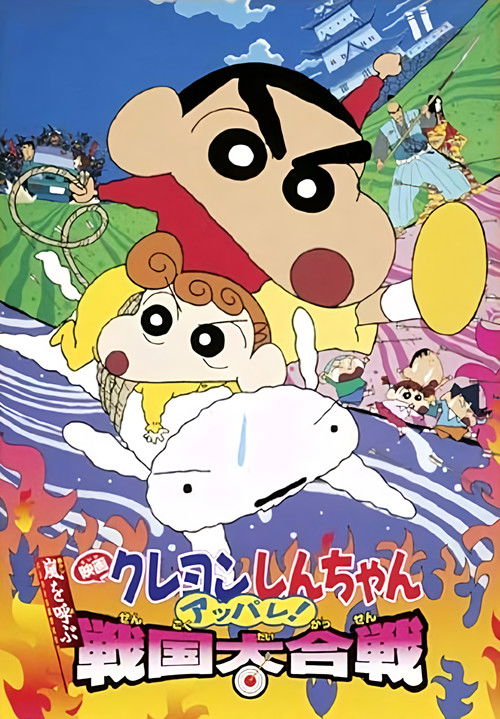
Crayon Shin-chan: Fierceness That Invites Storm! The Battle of the Warring States
2002
No user ratings available yet
Representation score: 2.3 out of 10
Representation Score
Fair
1995
Director
Mitsuru Hongo
Runtime
96 minutes
Average Rating
No ratings yetNew Showbiz Analysis
The film reflects its time period, featuring a homogeneous cast and traditional family dynamics. It lacks diverse casting and varied identity stories, focusing on a culturally specific media perspective. Its main progressive value lies in its tone, which consistently questions rigid social norms. The protagonist's refusal to conform offers a minor critique of strict behavioral expectations. Overall, the work adheres to the standard formulas of 1990s Japanese animation, prioritizing a classic hero-versus-villain storyline over diverse representation.
Category Breakdown
The film follows typical 1990s animation conventions. It doesn't include non-traditional gender identities or same-sex relationships, sticking to traditional heterosexual norms.
The family adheres to traditional provider and caregiver roles. However, Shinnosuke's energetic and unconventional behavior challenges strict gender expectations and discipline.
The cast is mainly made up of people from Kasukabe, Japan. The story centers on a specific Japanese middle-class experience from the mid-90s without exploring multiple cultural backgrounds.
The story uses a rebellious child cliché to challenge traditional institutions and authority. Shinnosuke acts as a humorous disruptor of established social norms.
The characters are shown within a typical able-bodied context. There are no significant portrayals of physical or neurodivergent disabilities with meaningful roles.
Present on Screen
Limited or Absent
Official Synopsis
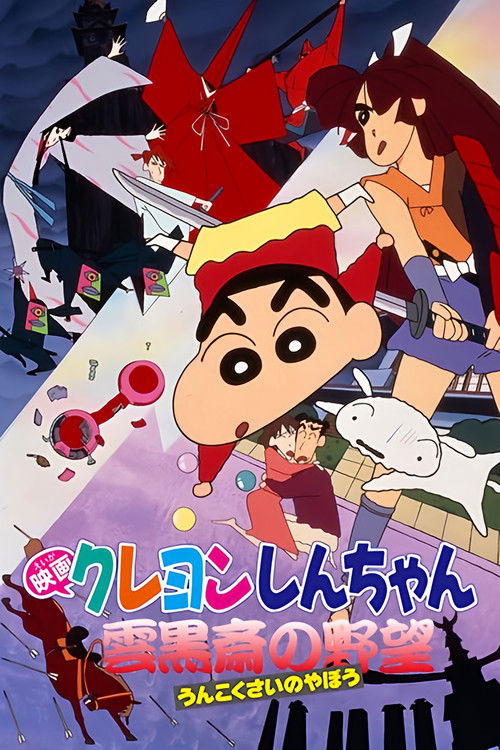
A time traveler claims that bad guys are trying to change the past! Shin-chan is on the case, going back in time to defeat the evil Lord Unkokusai.
2002
2001
2005
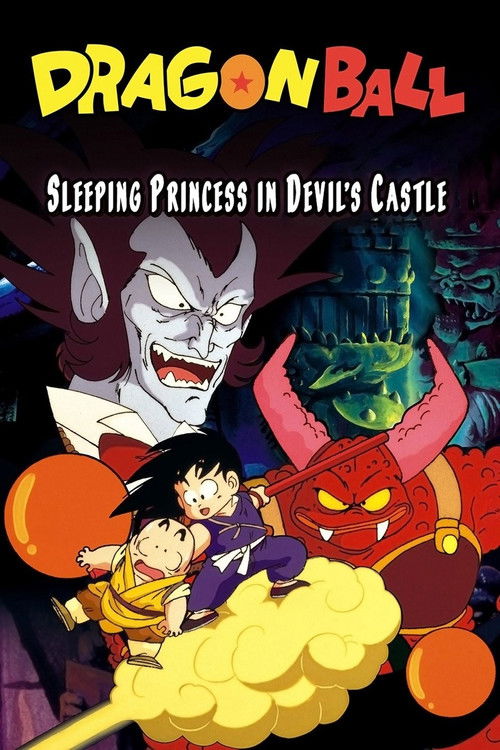
1987
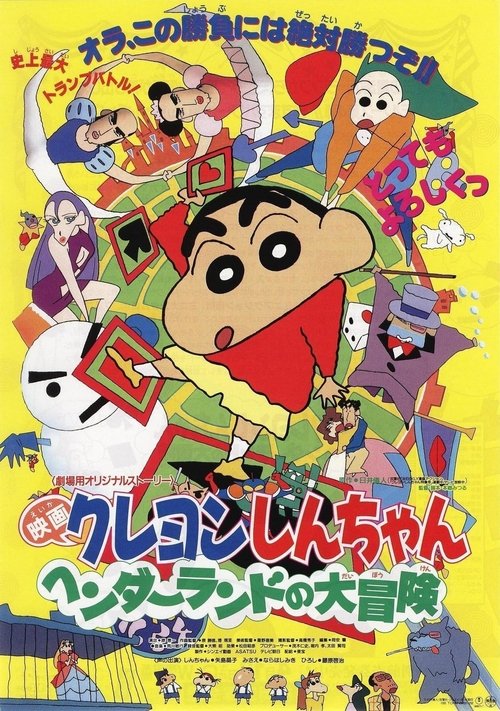
1996
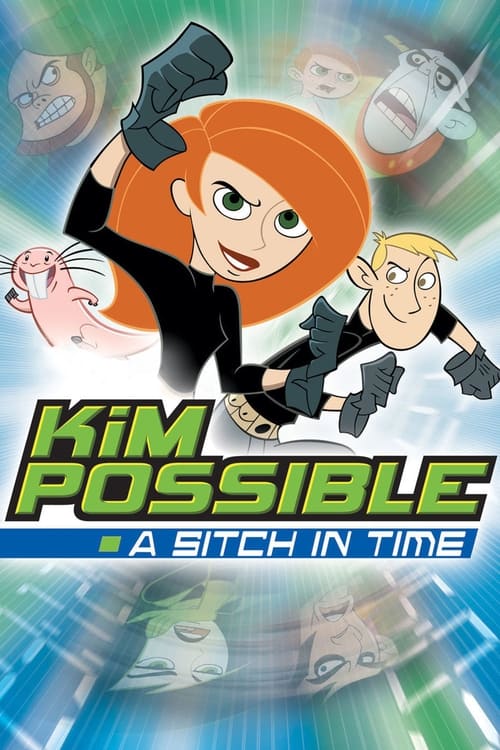
2003
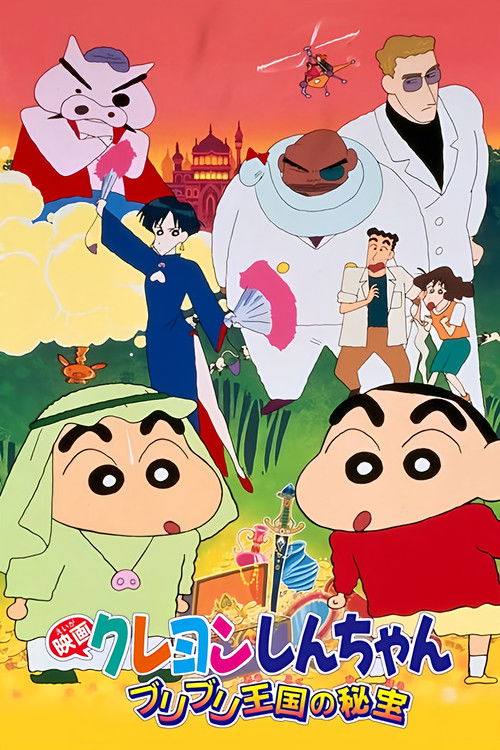
1994
1993
No reviews yet. Be the first to share your thoughts on this movie!
Use the rating form above to leave a star rating and optional review.