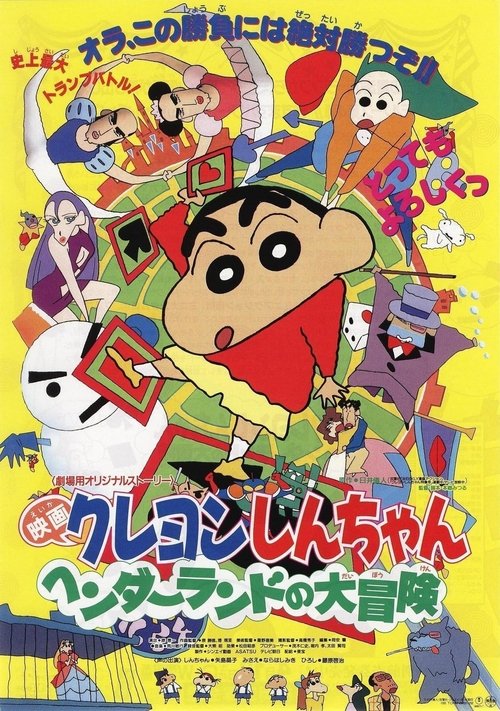
Crayon Shin-chan: Great Adventure In Henderland
1996
No user ratings available yet
Representation score: 5.4 out of 10
Representation Score
Limited
1994
Director
Mitsuru Hongo
Runtime
95 minutes
Average Rating
No ratings yetNew Showbiz Analysis
The film adheres to conventional social and demographic boundaries, functioning mainly as a slapstick adventure. It relies heavily on traditional family structures and homogeneous casting, limiting its engagement with diverse identities. While the protagonist's anti-social behavior disrupts traditional social hierarchies, the narrative does not intentionally explore multi-layered or progressive themes. The world-building favors surreal fantasy over multiculturalism. Ultimately, the film upholds established domestic and cultural norms without challenging them through systemic reimagining or diverse representation.
Category Breakdown
The film does not include any LGBTQ+ characters or stories. The Buri Buri Kingdom is shown through a traditional lens without addressing queer identities.
Characters adhere to typical domestic roles, with Hiroshi as the breadwinner and Misae managing the household. Slapstick humor sometimes mocks their authority but does not challenge traditional gender roles.
The story focuses on a Japanese family and a culturally homogeneous viewpoint. The fantasy setting emphasizes surrealism rather than exploring multicultural themes or ethnic diversity.
Cultural engagement is driven by absurd comedy and Shin-chan's antics that disrupt social norms. The film prioritizes individualistic chaos over critiques of religious or political institutions.
There are no prominent depictions of physical or neurodivergent disabilities. Characters follow standard physiological and cognitive archetypes typical of the comedy genre.
Present on Screen
Limited or Absent
Official Synopsis
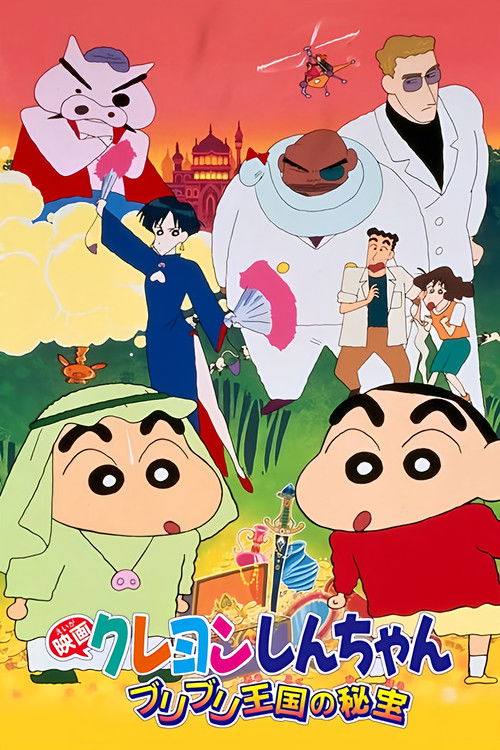
The Noharas win a vacation to the Kingdom of Buri Buri -- but the whole thing was just a clever ploy by an evil organization to kidnap Shin-chan!
1996
2014
1993

2004

2019
2000
2000
1997
No reviews yet. Be the first to share your thoughts on this movie!
Use the rating form above to leave a star rating and optional review.