
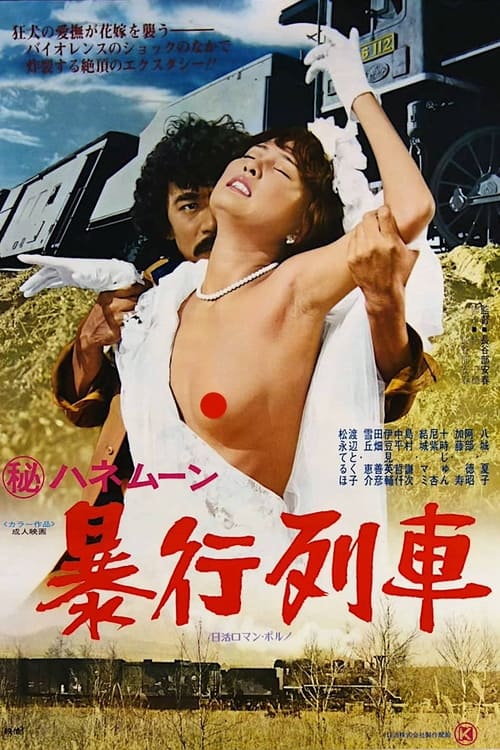
Date with a Kidnapper
1976
No user ratings available yet
Representation score: 2.3 out of 10
Representation Score
Minimal
1977
Director
Yasuharu Hasebe
Runtime
72 minutes
Average Rating
No ratings yetNew Showbiz Analysis
Secret Honeymoon: Assault Train is a crime drama that prioritizes exploitation and transgression over diverse representation. The film centers on the violent disruption of social milestones, using a wedding as a backdrop for criminal activity. While the film lacks intentional multi-layered diversity or multicultural casting, its narrative structure deconstructs the perceived safety of traditional social structures. It explores the volatility of social norms through a lens of lawlessness and systemic instability. Ultimately, the work functions as a study of moral relativism and the fragility of social order rather than a vehicle for diverse advocacy.
Category Breakdown
The film does not include any LGBTQ+ characters or non-cisgender identities. The plot revolves around a traditional wedding.
The story features a female protagonist placed in a vulnerable situation, aligning with 1970s crime clichés but subverting idealized femininity.
As a Japanese production, the casting appears ethnically uniform. There is no indication of multicultural casting or race-bending.
The story disrupts the sanctity of traditional institutions by depicting a honeymoon through crime and assault, offering a cynical view of social rituals and domestic stability.
There is no documented evidence of characters with physical or neurodivergent disabilities in the film.
Present on Screen
Limited or Absent
Official Synopsis
After a bungled robbery attempt, two thugs kidnap a bride on her wedding day.
1976

1977

1969

1995
1971
1974
1957

1972
No reviews yet. Be the first to share your thoughts on this movie!
Use the rating form above to leave a star rating and optional review.