
The Marquise of O
1976
No user ratings available yet
Diversity score: 3.9 out of 10
1974
Not RatedDirector
Rainer Werner Fassbinder
Runtime
141 minutes
Average Rating
No ratings yetSynopsis
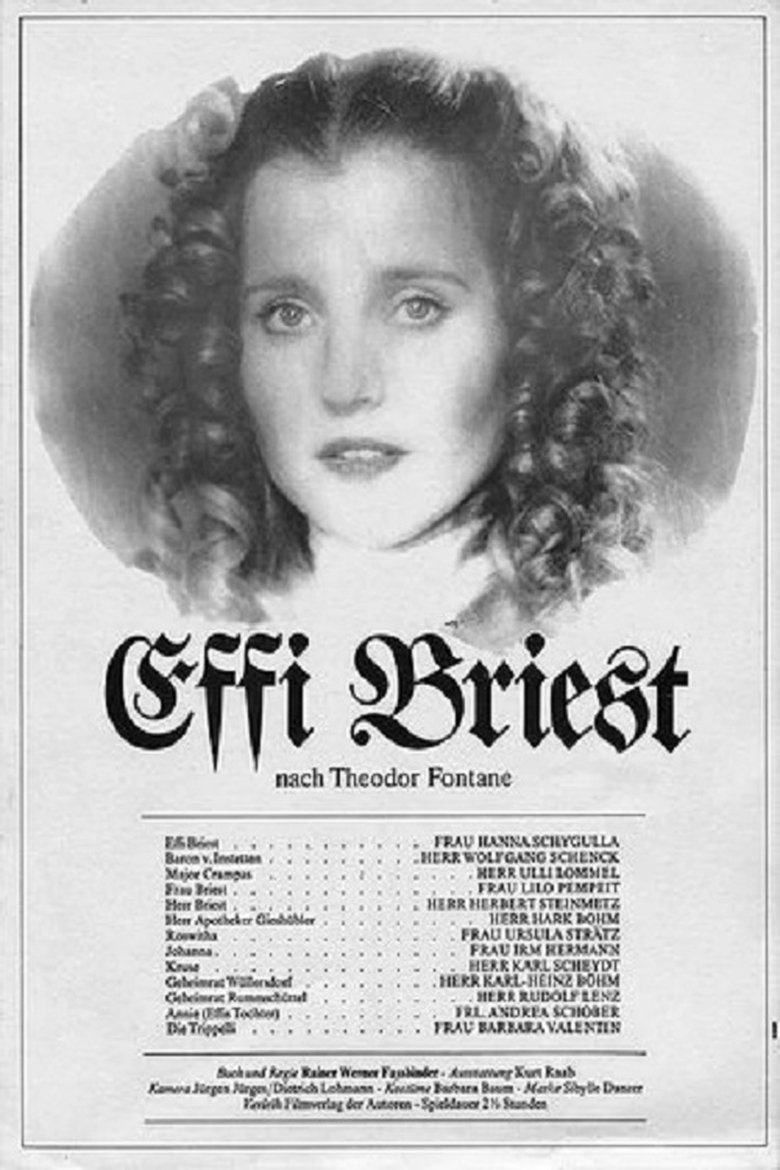
When 17-year-old Effi Briest marries the elderly Baron von Instetten, she moves to a small, isolated Baltic town and a house that she fears is haunted. Starved for companionship, Effi begins a friendship with Major Crampas, a charismatic womanizer.
Overall Score
Fair
Category Breakdown
LGBTQ+ Representation
The film focuses on heteronormative marriage and the fallout of an extramarital affair. It lacks any visible queer narratives or non-cisnormative identities.
Gender Representation
Effi’s struggle highlights the suffocating nature of patriarchal hierarchies. The film critiques the disparity between her emotional needs and the restrictive expectations of her husband.
Racial & Ethnic Diversity
The cast is predominantly white and European, reflecting the homogeneous Prussian aristocracy of the late 19th century. No diverse ethnic perspectives are utilized.
Religious & Cultural Diversity
The narrative offers a profound critique of Prussian social order and the concept of honor. It portrays these institutions as oppressive tools of social control.
Disability Representation
There are no prominent depictions of physical or neurodivergent disabilities that serve as central narrative drivers in this work.
Strengths
Areas for Improvement
AI Analysis
Fassbinder’s adaptation is a study of systemic power rather than demographic variety. While the cast lacks racial and LGBTQ+ diversity due to its historical setting, the film uses its period context to dismantle traditionalist social structures. The narrative succeeds by transforming a period drama into a critique of patriarchal and class-based oppression. It prioritizes intellectual subversion over modern inclusivity, focusing on how rigid social codes marginalize the individual. Ultimately, the film's low demographic scores are offset by its progressive intent to expose the hypocrisy of the ruling class and the psychological toll of systemic inequality.
1976

1973

2014

2009

2017

2010

2021

1973

1979
No reviews yet. Be the first to share your thoughts on this movie!
Use the rating form above to leave a star rating and optional review.