The Exam
2011
No user ratings available yet
Representation score: 4.2 out of 10
Representation Score
Fair
1988
Director
Andrzej Wajda
Runtime
116 minutes
Average Rating
No ratings yetNew Showbiz Analysis
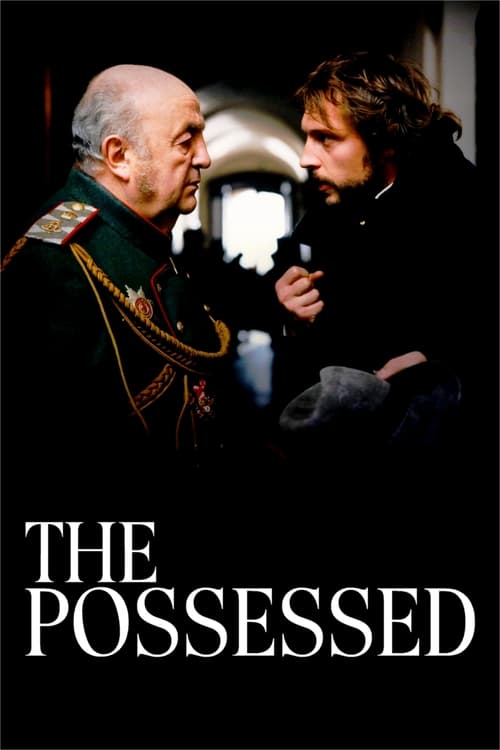
Andrzej Wajda’s adaptation of Dostoevsky’s work is a dense psychological study that prioritizes ideological conflict over demographic variety. It offers a sophisticated critique of institutional authority and religious structures, focusing on the instability of the human psyche and moral relativism. However, the film’s strict adherence to historical and literary realism limits its representation of LGBTQ+ identities and racial diversity. The narrative remains focused on the homogeneous social strata of 19th-century Russia. Ultimately, the film prioritizes depth over breadth, providing a profound critique of traditional social structures despite a lack of modern diversity markers.
Category Breakdown
The film stays true to its 19th-century literary roots and does not depict any non-straight or non-cisgender identities. Character dynamics revolve around political and psychological warfare rather than same-sex relationships.
Female characters play significant roles in the political upheaval and are not merely decorative. The film challenges traditional masculine dominance by portraying male revolutionaries as unstable and self-destructive.
The cast is ethnically uniform, reflecting the socio-political context of Imperial Russia. The narrative emphasizes class and ideological divisions over racial diversity.
The film provides a nuanced critique of the Orthodox Church and the Czarist state. It examines the erosion of religious morality and the family unit during revolutionary times.
Psychological instability and 'possession' are used as central metaphors for social psychosis. These mental states are portrayed with dramatic intensity to enhance the thriller elements.
Present on Screen
Limited or Absent
Official Synopsis
Russia, 1870. A group of young anarchist revolutionaries set out to overthrow the Czarist regime through violence. Their attacks create a climate of psychosis and mutual distrust among the population, but in reality, both revolutionaries and repressors are being manipulated by a diabolical individual.
2011
1983
1972
2014
1974
2020

2008
2016
No reviews yet. Be the first to share your thoughts on this movie!
Use the rating form above to leave a star rating and optional review.