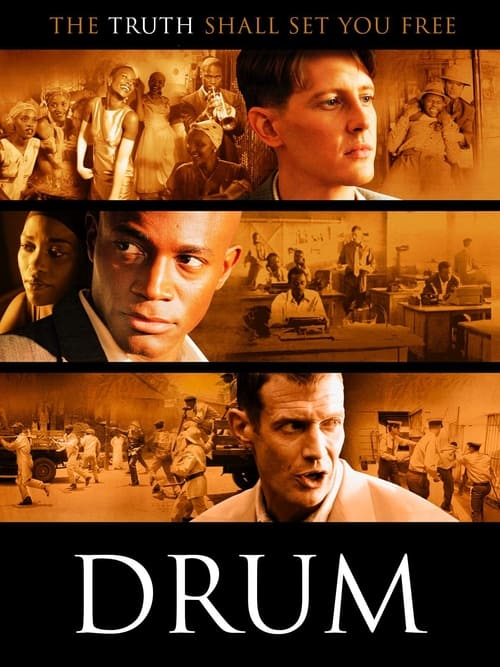
Drum
2004
No user ratings available yet
Representation score: 9.1 out of 10

Representation Score
Limited
1990
TV-14Director
David Wicht
Runtime
100 minutes
Average Rating
No ratings yetNew Showbiz Analysis
Windprints is a thriller set in the late apartheid era of Southern Africa. While the setting allows for exploring racial and regional complexities, the film follows conventional genre formulas. The narrative emphasizes traditional power dynamics, focusing on male intellectual control. This approach limits the depth of gender and LGBTQ+ representation, as the film does not challenge established social hierarchies. Overall, the film offers some racial diversity but lacks intentional complexity to disrupt established social norms.
Category Breakdown
The film does not include explicit LGBTQ+ characters or narratives. It focuses on traditional thriller elements that prioritize heterosexual relationships.
The story centers on a male journalist, highlighting male control and intellectual dominance. Female characters are present but do not seem to drive the plot.
The Namibian and South African setting offers potential for exploring racial diversity. The cast includes a mix of actors, but the film’s stance on social hierarchies remains unclear.
The narrative deals with institutional instability during a time of political change. However, it relies on established moral binaries rather than challenging familiar patterns.
There is no documented evidence of characters with visible or invisible disabilities in the cast or synopsis.
Present on Screen
Limited or Absent
Official Synopsis
A South African journalist is sent to Namibia to investigate a serial killer.
2004
1992

2006

2022

1976

2019

1996
1992
No reviews yet. Be the first to share your thoughts on this movie!
Use the rating form above to leave a star rating and optional review.