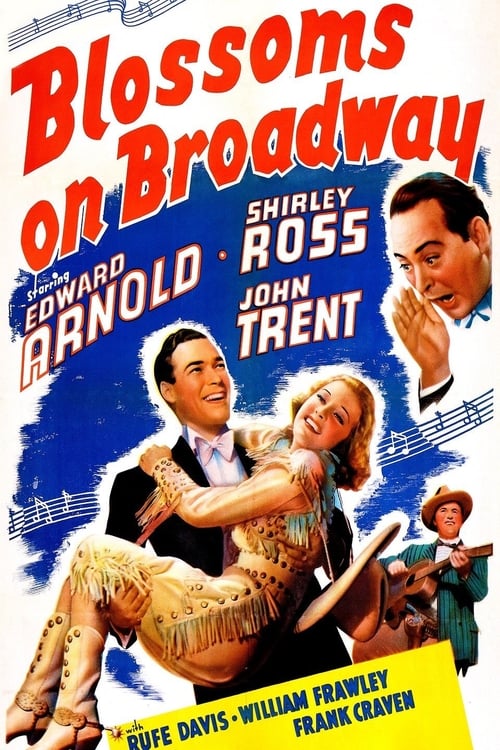
Blossoms On Broadway
1937
No user ratings available yet
Representation score: 2.0 out of 10

Representation Score
Fair
1944
ApprovedDirector
Walter Lang
Runtime
82 minutes
Average Rating
No ratings yetNew Showbiz Analysis
Greenwich Village is a classic product of the studio system, focusing on mainstream entertainment rather than challenging social norms. While it captures the bohemian subcultures of the early 20th century, it adheres strictly to the social hierarchies of the time. The film offers some female-led ability to act through its protagonist, but it does not challenge the prevailing racial or gender power structures of the 1940s. It serves as a window into a specific historical aesthetic rather than a tool for inclusive storytelling. Overall, the production presents a narrow view of identity, aligning with the era's conservative standards.
Category Breakdown
The film follows typical heterosexual relationships of 1940s cinema. There is no depiction of LGBTQ+ identities or same-sex relationships.
Ida Lupino's character explores some degree of independence within a male-dominated environment. However, her journey remains tied to traditional romantic roles.
The cast is largely uniform, reflecting the limited casting practices of 1944. The film lacks diverse racial representation and characters of color with significant influence.
The story mildly critiques commercialism by contrasting pure art with industrial demands. It upholds the social stability expected during wartime Hollywood.
There is no representation of physical, sensory, or neurodivergent conditions. Characters are portrayed as typically able-bodied.
Present on Screen
Limited or Absent
Official Synopsis
In 1922, a would-be classical composer gets involved with people putting on a musical revue.
1937
1933

1937
1929

1944

1953
1942

1937
No reviews yet. Be the first to share your thoughts on this movie!
Use the rating form above to leave a star rating and optional review.