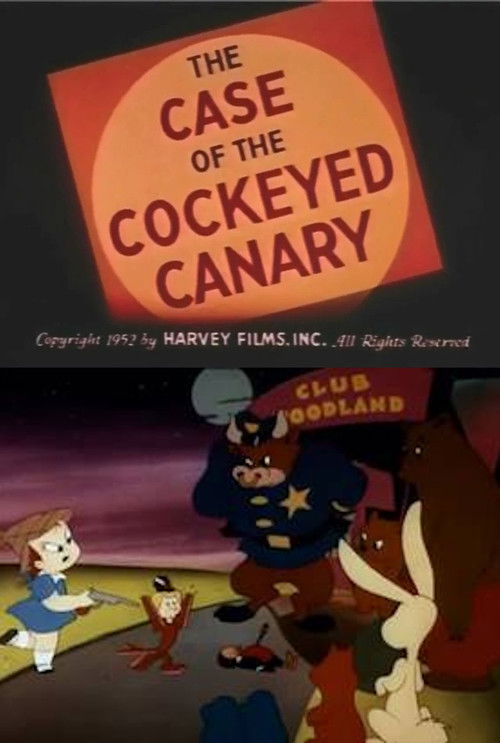
The Case of the Cockeyed Canary
1952
No user ratings available yet
Representation score: 0.1 out of 10
Representation Score
Minimal
1952
Director
Robert McKimson
Runtime
7 minutes
Average Rating
No ratings yetNew Showbiz Analysis
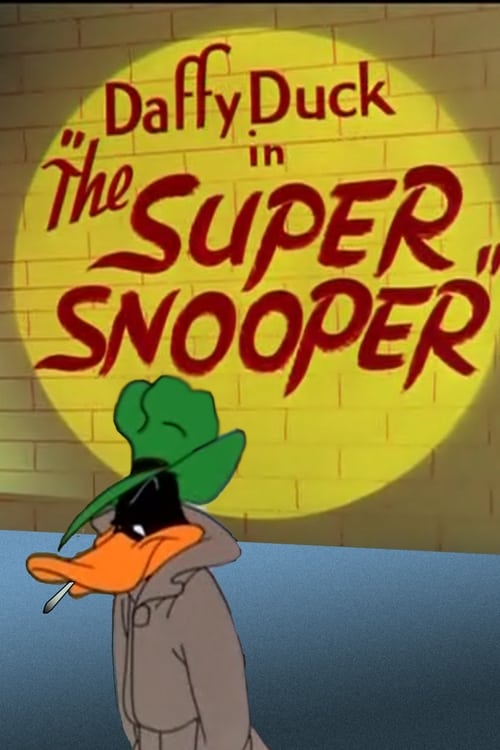
The Super Snooper is a mid-century animation that primarily parodies the hardboiled detective genre. It relies heavily on established detective clichés to drive its comedy, limiting its scope for diverse representation. Produced in 1952, the film reflects the era's homogeneous social norms. The narrative structure centers around a singular male archetype, leaving little room for varied cultural perspectives. Ultimately, the film's strength lies in its satirical take on noir, but this focus comes at the expense of meaningful representation of race, gender, and disability.
Category Breakdown
The film does not include any characters with LGBTQ+ identities or non-cisgender traits. It focuses solely on a parody of the detective genre.
The story revolves around a male character named Duck Drake. The parody mocks masculine competence, but there is no evidence of women's ability to drive the story or significant challenges to gendered power dynamics.
The setting and characters reflect the homogeneous casting standards of 1952. There is no indication of non-white or non-Anglo-Saxon representation within the narrative.
The film operates as a satire of Western noir traditions. It does not engage with anti-capitalist, religious, or overtly secularist themes, focusing instead on comedic deconstruction.
There are no characters with visible or invisible disabilities portrayed with ability to act. The narrative does not address disability as a central theme.
Present on Screen
Limited or Absent
Official Synopsis
In this parody of trench-coat detective films, Daffy Duck is Duck Drake, a "Private Eye, Ear, Nose, and Throat" who receives a telephone call summoning him to the J. Cleaver Axe-Handle Estate, where a murder has supposedly taken place.
1952
1944
1946
1957
1976
1966
1956
1958
No reviews yet. Be the first to share your thoughts on this movie!
Use the rating form above to leave a star rating and optional review.