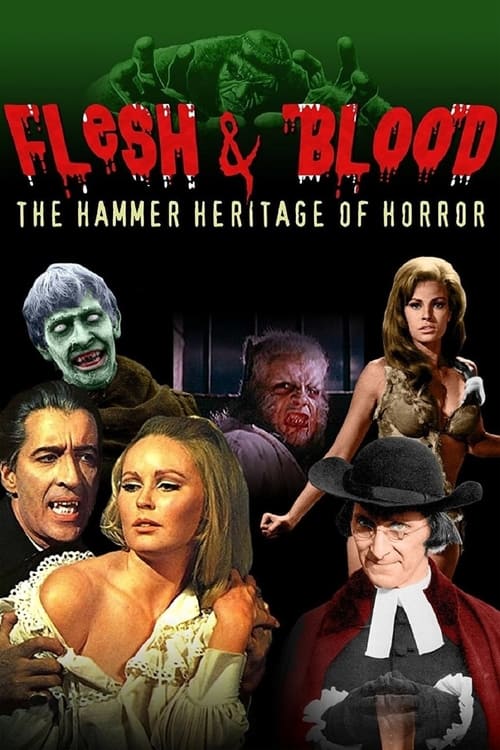
Flesh and Blood: The Hammer Heritage of Horror
1994
No user ratings available yet
Representation score: 4.4 out of 10
Representation Score
Limited
1987
Director
David M. Thompson
Runtime
60 minutes
Average Rating
No ratings yetNew Showbiz Analysis
This retrospective serves as an archival preservation of Hammer Film Productions' legacy. It prioritizes film history and industry nostalgia over the deconstruction of social hierarchies or progressive narrative restructuring. The documentary reflects the homogeneous casting and traditional gender roles prevalent during the studio's peak in the 1950s through the 1970s. It functions as a celebration of a specific British cinematic era rather than a critique of its social limitations. Ultimately, the work mirrors the Eurocentric and traditional perspectives of the films it examines. It acts as a historical record of a studio defined by the social norms of its time.
Category Breakdown
The documentary focuses on the technical and industrial history of the studio. It does not include explicit LGBTQ+ character arcs or narratives that challenge the assumption that everyone is straight or cisgender.
While the film provides a platform for interviews with actresses, it often centers on traditional masculine leadership. This creates a tension between highlighting female voices and the objectification of characters.
The film documents a studio era defined by Eurocentric casting norms. There is little evidence of a significant role in driving the story for non-white individuals within the primary catalog being discussed.
The subject matter is deeply rooted in Western cinematic tradition and British cultural institutions. It celebrates the commercial success of a Western studio rather than offering a systemic critique.
There is no evidence of a focus on disability ability to act. The documentary does not appear to address the subversion of common horror clichés involving physical or mental impairment.
Present on Screen
Limited or Absent
Official Synopsis
A retrospective of the films of Britain's Hammer Studios, renowned for making stylish horror films in the 1950s, '60s and '70s. Included are clips from Hammer productions and interviews with actors, actresses, directors and producers who worked on these films.
1994
2019
2018
2008
2024
2017
2005
2016
No reviews yet. Be the first to share your thoughts on this movie!
Use the rating form above to leave a star rating and optional review.