
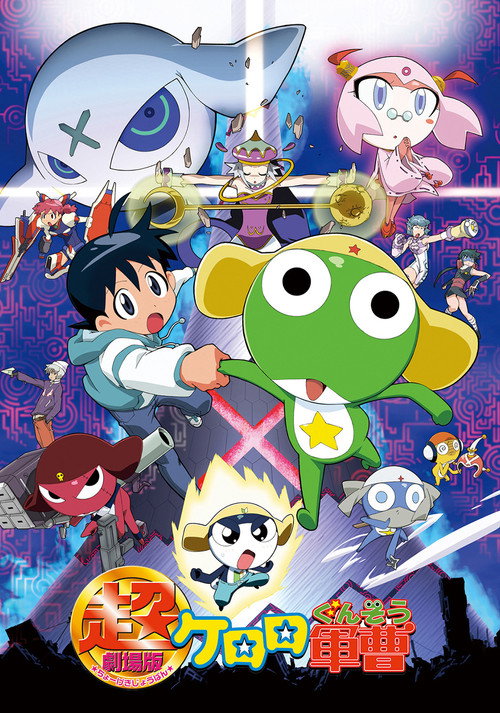
Sergeant Keroro The Super Duper Movie 2: Deep Sea Princess
2007
No user ratings available yet
Representation score: 3.1 out of 10
Representation Score
Fair
2006
Director
Yusuke Yamamoto
Runtime
60 minutes
Average Rating
No ratings yetNew Showbiz Analysis
The film functions as a genre-based comedy that prioritizes escapism and parody over detailed social representation. While it challenges the 'invader' cliché by emphasizing domesticity and consumerism, it doesn't delve deeply into social identities. Themes revolve around consumerism and the integration of aliens into a homogeneous Japanese society. This emphasis on hobbyist interests and slapstick humor leaves little space for exploring complex sociopolitical issues. Overall, the work adheres to the traditional constraints of its time, providing a light-hearted experience that avoids intricate sociopolitical commentary in favor of character-driven comedy.
Category Breakdown
The film emphasizes friendships and humorous interactions between characters. It doesn't show same-sex intimacy or non-binary identities, focusing instead on typical character types.
Female characters such as Natsumi have significant influence and authority. However, the film upholds a traditional gender hierarchy typical of mid-2000s animation.
The setting is a culturally uniform Japanese environment. The narrative doesn't address racial or ethnic diversity, concentrating instead on alien outsiders and everyday humans.
The plot centers on secular, consumerist interests like hobbyist models rather than traditional religious practices. It examines the disruption of local spiritual sites through the lens of modern leisure activities.
There is no noticeable focus on visible or invisible disabilities. Characters seem to operate within standard physical and cognitive abilities without dedicated narrative arcs.
Present on Screen
Limited or Absent
Official Synopsis
Sergeant Keroro and his four subordinates came from the planet Keron to the Earth to conquer. However, without notice, they began to enjoy the life on the Earth. Keroro was supposed to stay with Hitana to get the chance to conquer the Earth, but he became friend with Hinata's son, Fuyuki. Today, as usual, Keroro goes to buy his favorite Gundam plastic model with Fuyuki. On their way home, they find a small shrine, and enter. There, they find a vase, and happens to break it. Since the next day, strange things happen all over the town and people are in panic. Inside the vase, Kiruru, Keron's ancient ultimate weapon was sealed. At the moment, Mirara who holds the secret of the Kiruru appears and informs them of the only method to save the Earth. However...
2007
1994
2008

2017

1988

2009

2010
2017
No reviews yet. Be the first to share your thoughts on this movie!
Use the rating form above to leave a star rating and optional review.