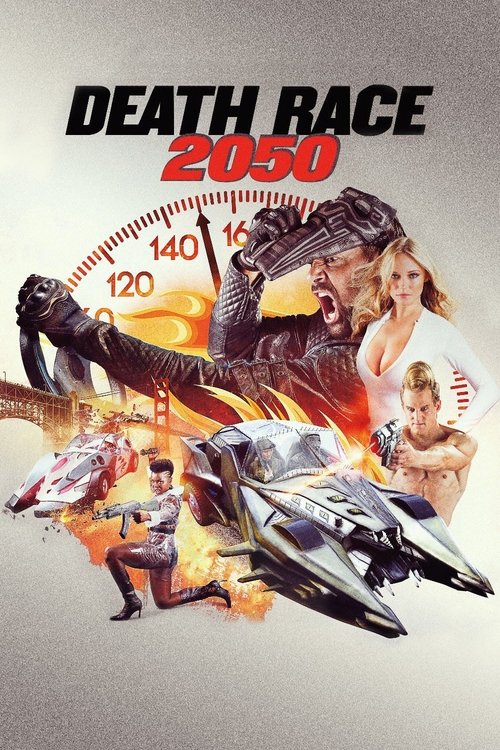
Death Race 2050
2017
No user ratings available yet
Representation score: 3.6 out of 10

Representation Score
Good
1975
RDirector
Paul Bartel
Runtime
80 minutes
Average Rating
No ratings yetNew Showbiz Analysis
Death Race 2000 serves as a satirical critique using a violent, dystopian backdrop to examine systemic dysfunction. Its main strength lies in its sophisticated deconstruction of the interplay between government, media, and capitalism to perpetuate oppression. While the film excels at critiquing societal structures, it falls short in representing specific identity groups. It lacks meaningful inclusion of LGBTQ+ narratives and disability, focusing instead on the broader mechanisms of a hyper-violent, consumer-driven reality. Ultimately, the film presents a postmodern perspective on a world where traditional morality has been supplanted by state-mandated entertainment. It challenges the viewer’s complicity in systemic violence through its portrayal of a hero who is actually a state-sponsored killer.
Category Breakdown
The film does not include explicit LGBTQ+ characters or stories. It maintains an underground aesthetic but does not highlight specific non-cisgender identities.
Women are shown as active participants rather than passive stereotypes. Characters like Jane Carroll navigate political environments, challenging traditional male-dominated action clichés.
The casting includes a mix of ethnicities among drivers and pedestrians, preventing the dystopian setting from seeming entirely white.
The film critiques Western institutions and capitalism with a biting edge. It dismantles American exceptionalism by presenting state-sanctioned violence as a consumer product.
There is no meaningful representation of disability. Characters with physical impairments or neurodivergence are not central to the narrative or identity exploration.
Present on Screen
Limited or Absent
Official Synopsis
In a boorish future, the government sponsors a popular, but bloody, cross-country race in which points are scored by mowing down pedestrians. Five teams, each comprised of a male and female, compete using cars equipped with deadly weapons. Frankenstein, the mysterious returning champion, has become America's hero, but this time he has a passenger from the underground resistance.
2017
1975
1984
1986

1995
1965
2010

1986
No reviews yet. Be the first to share your thoughts on this movie!
Use the rating form above to leave a star rating and optional review.