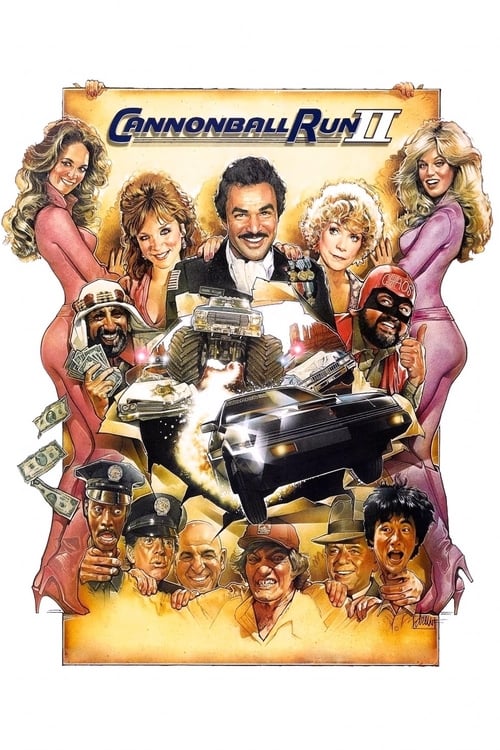
Cannonball Run II
1984
No user ratings available yet
Representation score: 3.2 out of 10
Representation Score
Limited
1981
PGDirector
Hal Needham
Runtime
95 minutes
Average Rating
No ratings yetNew Showbiz Analysis
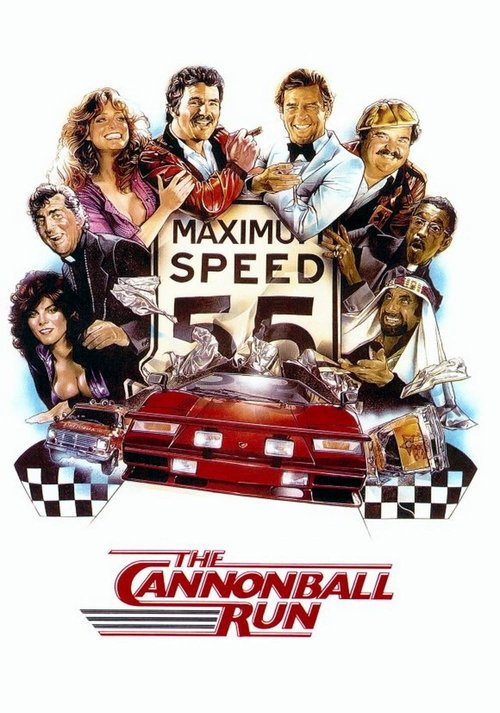
The Cannonball Run is a fast-paced comedy that emphasizes action and humor over social complexity. Its narrative structure upholds traditional social hierarchies and demographic uniformity, centered around a male-dominated ensemble. Though the film provides a light-hearted critique of legal frameworks and rule-breaking behavior, it lacks depth in addressing diverse identities or social critiques. Characters are defined by their ability to navigate and master machinery rather than by nuanced personal or social characteristics. Overall, the film adheres to the mainstream cinematic standards of 1981, offering limited engagement with diverse identities or systemic social issues.
Category Breakdown
The film does not include any LGBTQ+ characters or individuals whose gender does not match their assigned-at-birth status.
The story focuses primarily on male characters who drive the plot forward. Female characters play minor roles, often as observers or romantic interests rather than active participants.
The cast is mainly composed of white actors, reflecting the era's mainstream cinema standards. The film does not feature non-white characters with significant roles or influence.
The story presents law enforcement as a humorous obstacle, challenging state authority. It does not explore religious themes or cultural diversity.
The film does not depict any characters with visible or invisible disabilities. Characters are portrayed as physically capable and skilled in operating high-performance vehicles.
Present on Screen
Limited or Absent
Official Synopsis
A cross-country road race is based on an actual event, the Cannonball Baker Sea to Shining Sea Memorial Trophy Dash, organized by Brock Yates to protest the 55 mph speed limit then in effect in the U.S. The Cannonball was named for Erwin G. "Cannonball" Baker, who in the roaring 20's rode his motorcycle across the country. Many of the characters are based on ruses developed by real Cannonball racers over the several years that the event was run.
1984
1971

1980
1974
1977
1971
1976

1975
No reviews yet. Be the first to share your thoughts on this movie!
Use the rating form above to leave a star rating and optional review.