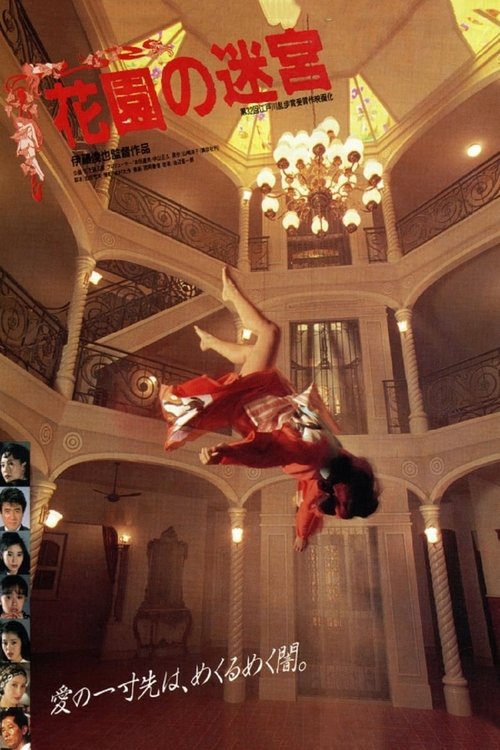
Labyrinth Romanesque
1988
No user ratings available yet
Representation score: 3.8 out of 10
Representation Score
Fair
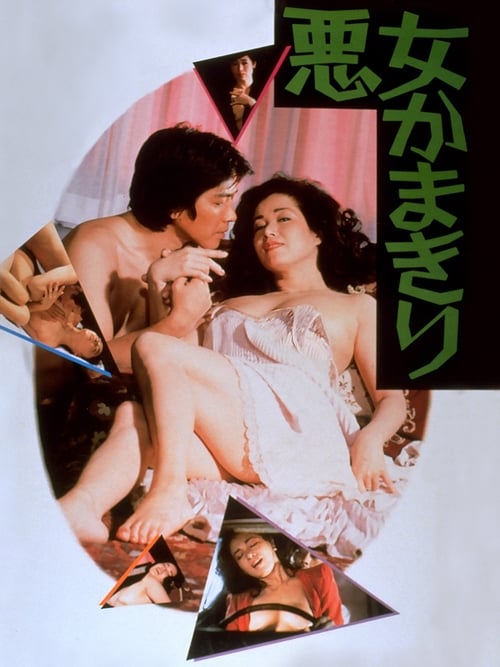
1983
Director
Shunichi Kajima
Runtime
84 minutes
Average Rating
No ratings yetNew Showbiz Analysis
Praying Mantis is a traditional mystery that adheres to the genre conventions of 1983 Japan. It centers on a female protagonist, Masako, whose actions and potential involvement in a crime drive the suspense. This provides a level of women's ability to drive the story rarely seen in more passive roles. However, the film lacks multi-layered depth. The narrative focuses on plot-driven suspense and individual criminality rather than exploring diverse identities or social subversion. It functions primarily as a standard genre piece within its specific cultural context. While the film avoids derogatory clichés, it does not actively pursue progressive representation.
Category Breakdown
The film does not include any explicit LGBTQ+ characters or narratives. The central relationship follows a traditional man-and-woman structure typical of the mystery genre.
Masako, a hairdresser, serves as the central figure of tension. The plot positions her as a person of interest in a high-stakes criminal investigation, granting her a significant role in driving the story.
As a Japanese production, the film reflects its specific cultural demographic. It operates within a homogeneous framework without evidence of whitewashing or Western-centric hierarchies.
The story focuses on individual morality and legal consequences related to embezzlement and death. It operates within standard social orders rather than offering systemic critiques.
There is no mention of characters with visible or invisible disabilities in the narrative.
Present on Screen
Limited or Absent
Official Synopsis
A man and a woman drift ashore after a typhoon. The man, dead, is an escaped perpetrator, and the woman, alive, is a hairdresser Masako. A detective in charge of an embezzlement case is tracking the whereabouts of disappeared money and suspects Masako. One year later, a real estate company president dies a suspicious death in front of Masako at her beauty salon. Was it an accidents or murder?
1988

2008

1982

1983
2008

1958
1963
1974
No reviews yet. Be the first to share your thoughts on this movie!
Use the rating form above to leave a star rating and optional review.