
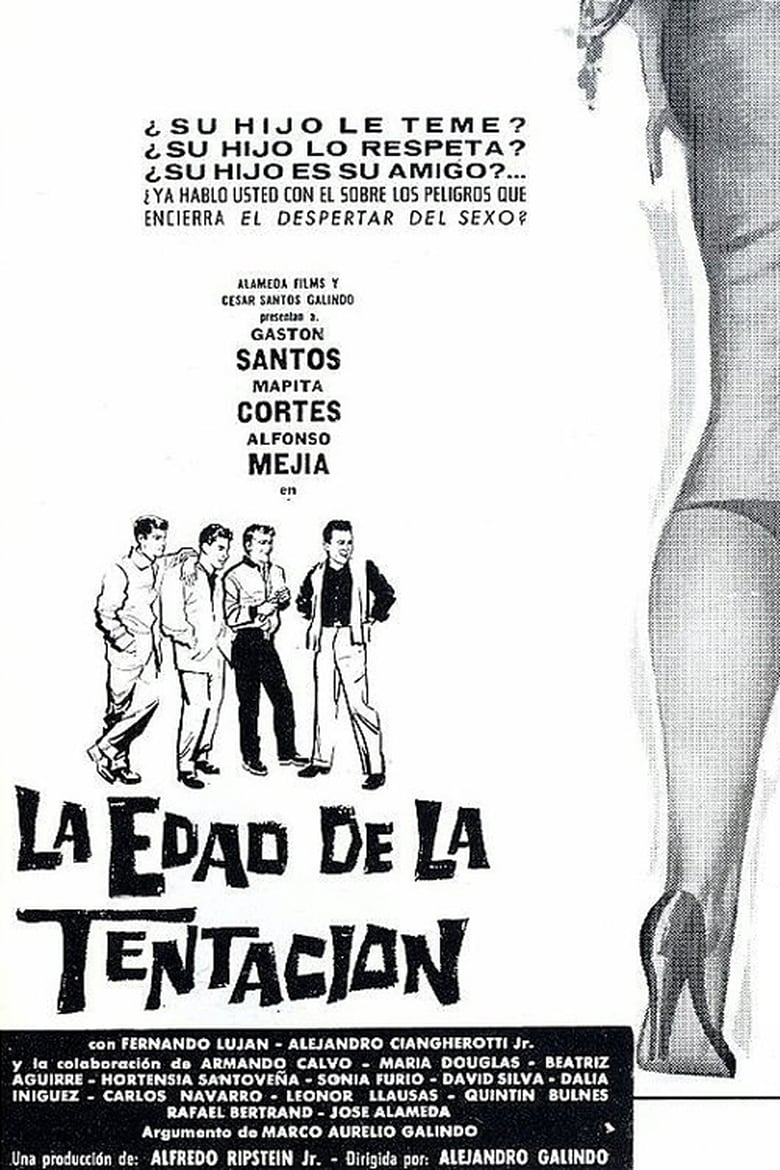
No desearás la mujer de tu hijo
1950
No user ratings available yet
Diversity score: 3.2 out of 10
1959
Director
Alejandro Galindo
Runtime
95 minutes
Average Rating
No ratings yetSynopsis
By the negligence of parents who not assume their responsibility in sex education, many lives are ruined
Overall Score
Limited
Category Breakdown
LGBTQ+ Representation
The film adheres to mid-century melodrama conventions, prioritizing heteronormative romantic structures. There is no evidence of queer narratives or non-cisnormative identities present in the story.
Gender Representation
Female protagonists drive the emotional core, yet their struggles are framed through themes of temptation and ruin. This positioning reinforces traditional hierarchies by making women's agency reactive to social pressures.
Racial & Ethnic Diversity
The cast reflects the national identity of 1950s Mexico without the whitewashing seen in Hollywood imports. However, the film operates within a homogeneous cultural framework that lacks intersectional casting.
Religious & Cultural Diversity
While critiquing parental negligence, the narrative aligns with traditional moralism. It emphasizes social and familial stability rather than challenging religious or Western institutional norms.
Disability Representation
There is no discernible evidence regarding the portrayal of physical or neurodivergent disabilities within the film.
Strengths
Areas for Improvement
AI Analysis
Alejandro Galindo’s drama serves as a period-specific social critique, focusing on the systemic failure of sex education. While the subject matter touches on progressive sociological observations, the execution remains deeply tethered to the cautionary morality of 1950s melodrama. The film observes social friction through a lens of traditionalism rather than disrupting established power dynamics. It functions more as a moral lesson than a tool for social deconstruction. Ultimately, the work reflects the demographic and ideological norms of the Golden Age of Mexican cinema, prioritizing conventional social stability over intersectional representation.
1950
1956
1954

1956

1943
1971
1986
1965

1963

1975

1955
1945
No reviews yet. Be the first to share your thoughts on this movie!
Use the rating form above to leave a star rating and optional review.