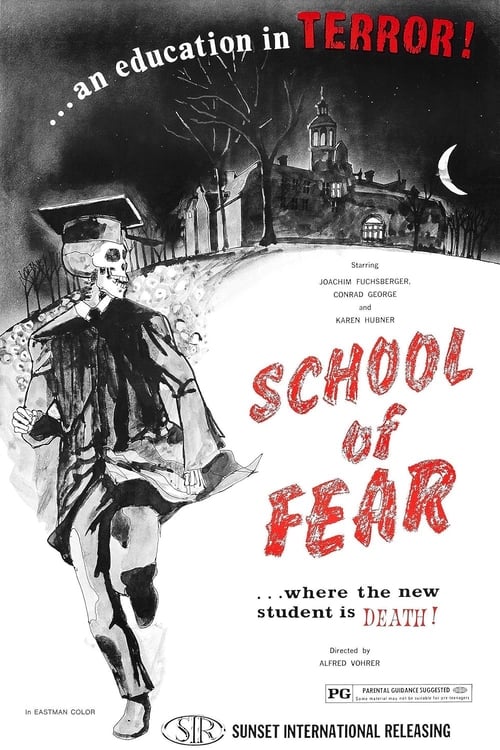
School of Fear
1969
No user ratings available yet
Representation score: 2.2 out of 10

Representation Score
Minimal
1968
Director
Roland Klick
Runtime
86 minutes
Average Rating
No ratings yetNew Showbiz Analysis
Little Vampire is a traditional genre piece that prioritizes supernatural storytelling over diverse representation. The film adheres to the demographic norms of 1968 West Germany, featuring a homogeneous European cast and setting. While the film offers a subtle critique of how society and institutions handle uncomfortable truths, this is more of a thematic exploration of social stability rather than a deliberate effort to represent diverse identities. The narrative structure remains focused on adolescent autonomy and the disruption of domestic peace. Ultimately, the film does not intentionally challenge established gendered or racial hierarchies, making it a period-specific work reflecting the social landscapes of its time.
Category Breakdown
The film focuses solely on a supernatural encounter and does not include any characters or subtexts that challenge traditional views on sexuality or gender.
The story centers around a male protagonist's journey. Female characters play important roles as plot catalysts but are not developed in depth.
The production reflects a homogeneous European population typical of its era. There is no evidence of diverse ethnic identities or actors from different backgrounds.
The narrative explores themes of adolescent alienation and social stability. It highlights how institutions can hide uncomfortable truths.
There are no characters with visible or invisible disabilities in the film. Supernatural elements serve as the primary source of 'othering'.
Present on Screen
Limited or Absent
Official Synopsis
In a german suburb a babysitter is too busy with her own teenage business and leaves a boy with his little sister alone. Then the girl is missing. The only way the family and society are able to deal with the horror is to ignore it and hide the truth in the closet.
1969
1976
1998

2005

2011
1965

2011
1976
No reviews yet. Be the first to share your thoughts on this movie!
Use the rating form above to leave a star rating and optional review.