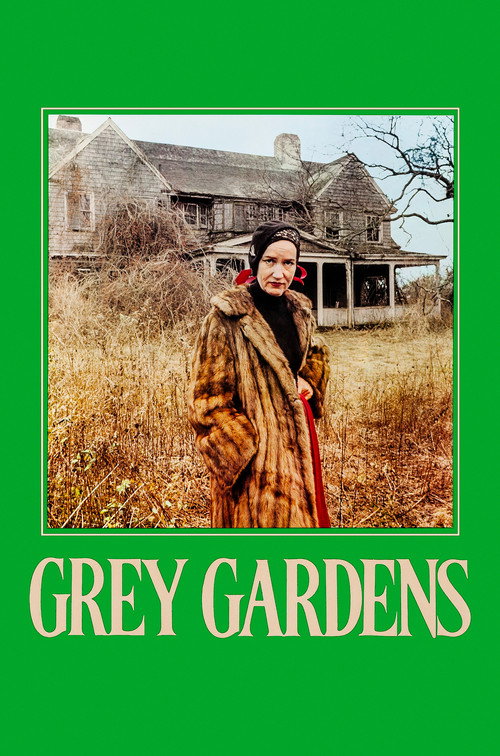
Grey Gardens
1976
No user ratings available yet
Representation score: 7.7 out of 10
Representation Score
Good
2006
NRDirector
Albert Maysles, David Maysles
Runtime
91 minutes
Average Rating
No ratings yetNew Showbiz Analysis
The documentary excels at breaking down social norms and traditional domestic hierarchies. By focusing on the eccentric, interdependent lives of the Beales, it challenges standard expectations of gender roles and the stability of the nuclear family. However, the film is limited by its narrow socioeconomic and racial focus. The narrative is centered on a specific, homogeneous Anglo-Saxon family, offering little multi-layered breadth or racial diversity. Ultimately, the film's strength lies in its postmodern approach to identity. It prioritizes the subjective, fragmented truths of its subjects over a traditional moral narrative, providing a meaningful look at cognitive diversity and non-conformity.
Category Breakdown
The film doesn't explicitly show queer identities or same-sex relationships. However, it challenges traditional domestic life by showing a non-conventional lifestyle that exists outside typical societal structures.
The story turns traditional female hierarchies upside down by focusing on a chaotic, eccentric female community. It highlights women's ability to drive the story through their unique behavior and rejection of conventional norms.
The film focuses intensely on a homogeneous, high-status white family. It lacks racial or ethnic diversity among the main characters and their close social circle.
The film questions the American Dream and the stability of Western institutions. It portrays the subjects' relationship with the Catholic Church through personal complexity rather than institutional reverence.
The documentary provides a nuanced look at mental instability and neurodivergent behaviors. It treats psychological struggles as central to the subjects' identities rather than viewing them solely through a medical lens.
Present on Screen
Limited or Absent
Official Synopsis
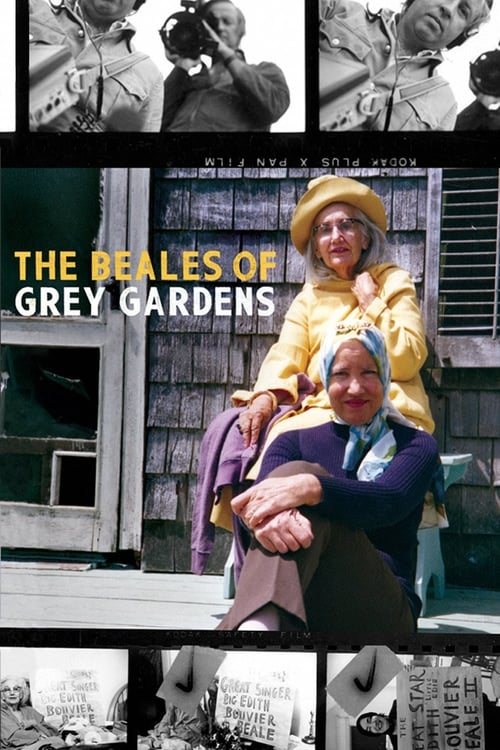
Mother and daughter - Big Edie and Little Edie Beale - live with six cats in a crumbling house in East Hampton. Little Edie, in her 50s, who wears scarves and bright colors, sings, mugs for the camera, and talks to Al and David Maysles, the filmmakers. Big Edie, in her 70s, recites poetry, comments on her daughter's behavior, and sings "If I Loved You" in fine voice. She talks in short sentences; her daughter in volumes. The film is episodic: friends visit, there's a small fire in the house, Little Edie goes to the shore and swims. She talks about the Catholic Church. She's ashamed that local authorities raided the house because of all the cats. She values being different.
1976

2014

2003
2009
2012

2015
1975
2015
No reviews yet. Be the first to share your thoughts on this movie!
Use the rating form above to leave a star rating and optional review.