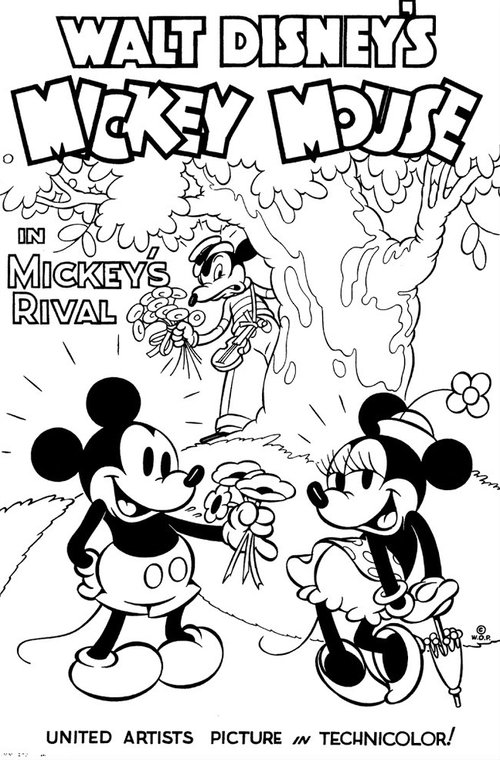
Mickey's Rival
1936
No user ratings available yet
Diversity score: 1.3 out of 10

1939
NRDirector
Hamilton Luske
Runtime
5 minutes
Average Rating
No ratings yetSynopsis
Minnie is baking cookies. When she leaves for a short while, her dog Fifi accidentally drops popcorn kernels in the dough. Mickey and Pluto come over and visit with Minnie and Fifi. When Mickey notices that something is burning, Minnie remembers the cookies, which are popping popcorn out of them. Minnie is upset and lies on her sofa crying. Mickey goes out and buys a large amount of cookies and crackers. He comes back and shows them to her and she is overjoyed. The short was originally a theatrical advertisement for the National Biscuit Company (now known as Nabisco), where all of the products seen are various Nabisco products (i.e. Ritz Crackers, Oreo Cookies, Fig Newtons, etc.). These would later be edited out and replaced with generic-brands in television broadcasts and home video releases.
Overall Score
Minimal
Category Breakdown
LGBTQ+ Representation
The story focuses on a domestic interaction between Mickey and Minnie. It adheres strictly to heteronormative romantic archetypes without any queer subtext or non-cisnormative identities.
Gender Representation
Minnie is confined to a domestic baking role and displays emotional fragility. Mickey acts as the competent provider, resolving conflict through consumerist action and masculine leadership.
Racial & Ethnic Diversity
The cast consists of anthropomorphic animals within a homogeneous social framework. No racial or ethnic diversity is present, nor are species used as metaphors for human identities.
Religious & Cultural Diversity
The film serves as a commercial for Nabisco, promoting consumerism as a solution to distress. It celebrates traditional social units without critiquing Western capitalist structures.
Disability Representation
No characters portray physical, sensory, or neurodivergent disabilities. All characters operate within the standard physical capabilities typical of 1939 animation styles.
Strengths
Areas for Improvement
AI Analysis
Mickey's Surprise Party is a product of its era, functioning more as a commercial vehicle for Nabisco than a complex narrative. It relies heavily on established character archetypes to drive a simple domestic plot. The film reinforces mid-20th-century social mores, particularly regarding gendered labor and emotional expression. Mickey's role as a provider and Minnie's role as a domestic baker reflect traditional hierarchies. Ultimately, the short lacks intersectional depth. It presents a narrow, consumerist view of happiness where material goods resolve emotional conflict, offering no representation of diverse identities or lived experiences.
1936
1932
1931
1942
1934

1947
1931
1948
1939
1946
1952
1948
No reviews yet. Be the first to share your thoughts on this movie!
Use the rating form above to leave a star rating and optional review.