
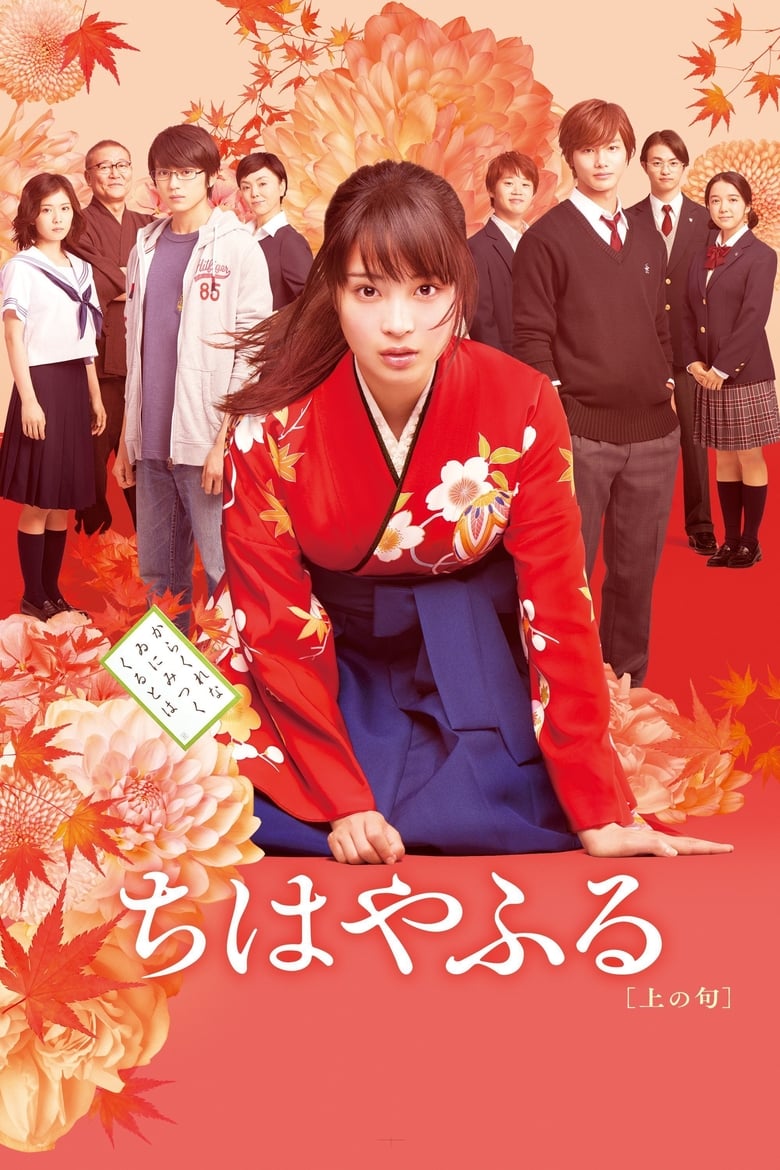
Chihayafuru: Part II
2016
No user ratings available yet
Diversity score: 2.9 out of 10
2016
Director
Norihiro Koizumi
Runtime
111 minutes
Average Rating
No ratings yetSynopsis
When Chihaya Ayase was in the 6th grade of elementary school, she met Arata Wataya. Arata Wataya transferred from Fukui Prefecture. Taichi Mashima was Chihaya Ayase's friend since they were little. Arata got close to Chihaya and Taichi from the card game karuta. Four years later, Chihaya is a high school student. Chihaya learns that Arata, who went back to Fukui Prefecture, doesn't play karuta anymore. Believing they will meet Arata again, Chihaya and Taichi starts a karuta club at their high school.
Overall Score
Limited
Category Breakdown
LGBTQ+ Representation
The film focuses on traditional romantic and platonic bonds. There is no evidence of non-cisnormative identities or same-sex intimacy.
Gender Representation
Chihaya Ayase serves as a strong female protagonist in a male-dominated arena. She demonstrates significant agency and drives the plot through her mastery of karuta.
Racial & Ethnic Diversity
Casting is ethnically homogeneous, reflecting the specific Japanese setting. The film presents a localized experience without broader demographic expansion.
Religious & Cultural Diversity
The story is deeply rooted in Japanese tradition through karuta poems. It treats these traditions as sources of passion rather than critiquing them.
Disability Representation
No visible or invisible disabilities are portrayed as central to the character arcs. The focus remains on the rigors of competitive card playing.
Strengths
Areas for Improvement
AI Analysis
Chihayafuru: Part I is a focused sports drama that excels in character agency but lacks demographic breadth. By centering on Chihaya Ayase, the film successfully avoids the trope of the passive female lead, instead presenting a woman as the primary driver of competitive excellence. However, the film operates within a very narrow social framework. It adheres to conventional heteronormative structures and presents an ethnically homogeneous cast that reflects a specific, localized Japanese setting without exploring intersectional identities. Ultimately, while the film provides a high-fidelity adaptation of its source material, it does not attempt to subvert or critique established social, cultural, or gender hierarchies.
2016

2021
2018

2018
2001
2018
No reviews yet. Be the first to share your thoughts on this movie!
Use the rating form above to leave a star rating and optional review.