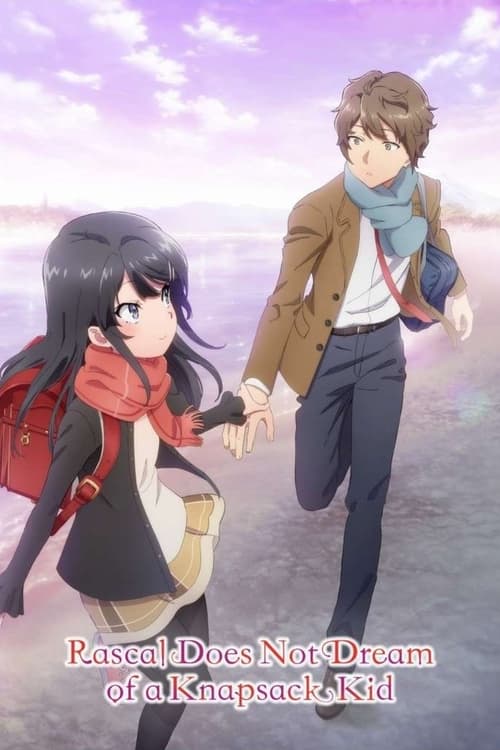
Rascal Does Not Dream of a Knapsack Kid
2023
No user ratings available yet
Representation score: 6.8 out of 10
Representation Score
Limited
2026
Director
Soichi Masui
Runtime
118 minutes
Average Rating
No ratings yetNew Showbiz Analysis
The film opens with the familiar, sun-drenched aesthetic of the *Rascal Does Not Dream* franchise, where the camera lingers on the delicate interplay between Sakuta and Mai. This visual language sells a specific kind of youthful intimacy, one that is both tender and slightly melancholic. The narrative argument here is that emotional maturity is achieved through the resolution of psychological trauma, a theme that is central to the series. However, the film’s internal logic reveals a tension: while it positions Mai’s emotional journey as the core of the story, the actual resolution is driven by Sakuta’s rational intervention. This dynamic subtly reinforces a traditional gender hierarchy, where the female character’s pain is the problem to be solved, and the male character’s intellect is the solution. The ending, as is typical for this franchise, settles on a reaffirmation of personal bonds over societal expectations. The last image, likely a quiet moment between Sakuta and Mai, serves as the moral verdict: that true connection transcends the superficial pressures of high school life. This is a comforting, if somewhat predictable, conclusion. It does not challenge the status quo of gender roles or cultural norms; instead, it reinforces them by presenting the male protagonist as the stabilizing force in the female lead’s emotional life. The film is a faithful adaptation of its source material, but it does not push the boundaries of its narrative or its representation. It is a story about growing up, but it is a story that is told from a very specific, and somewhat traditional, perspective.
Category Breakdown
The narrative centers on heterosexual pairings, specifically Sakuta and Mai, with no on-screen same-sex intimacy or queer identity markers. The romantic tension remains strictly within the default male-female framework of the series.
Mai Sakurajima functions as the emotional anchor and moral compass, yet the plot’s resolution relies on Sakuta’s intellectual intervention. While she retains agency in her feelings, the "Adolescence Syndrome" mechanic positions her trauma as a puzzle for the male protagonist to solve rather than a self-resolved condition.
The cast is entirely Japanese, reflecting the source material’s domestic setting. No non-Asian characters appear, and the story does not engage with cross-cultural dynamics or ethnic diversity beyond its native context.
The film treats high school social hierarchies and familial expectations as the primary obstacles. Traditional Japanese values regarding duty and connection are portrayed as the source of the characters’ pain, but the resolution reaffirms the importance of personal bonds over institutional or societal norms.
The supernatural "Adolescence Syndrome" is a metaphor for psychological distress, not a physical or cognitive disability. No characters are depicted with diagnosed impairments, and the narrative does not explore the lived experience of disability.
Present on Screen
Limited or Absent
Official Synopsis
Faced with the truth about Miori and Touko Kirishima, Sakuta must make a choice. This will be his final case of Adolescence Syndrome!
2023
2019
2023
2020
2022

2026

2015

2013
No reviews yet. Be the first to share your thoughts on this movie!
Use the rating form above to leave a star rating and optional review.