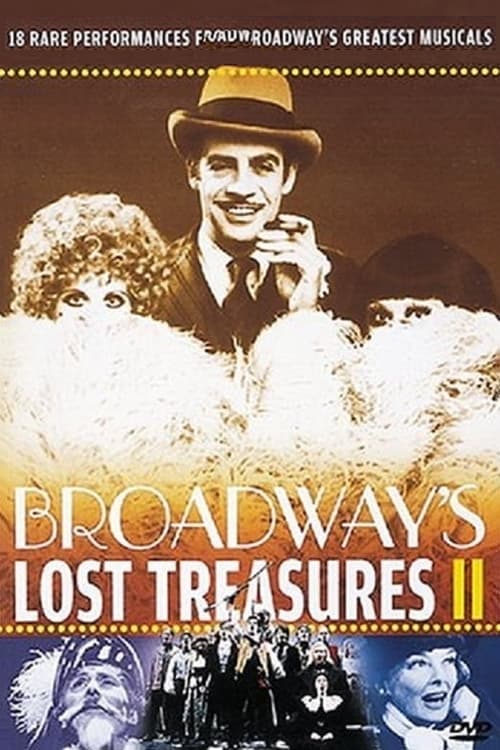
Broadway's Lost Treasures II
2004
No user ratings available yet
Representation score: 3.1 out of 10

Representation Score
Fair
2003
TV-GDirector
Christopher A. Cohen
Runtime
110 minutes
Average Rating
No ratings yetNew Showbiz Analysis
Broadway's Lost Treasures acts as a restorative historical archive, preserving the Tony Awards' Golden Age through remastered footage. Because it is a compilation of existing broadcasts, its diversity is a direct reflection of the social constraints and industry standards of the late 1960s through the mid-1980s. The film excels at technical preservation and celebrating theatrical history. However, it does not function as a vehicle for contemporary social commentary or the disruption of traditional hierarchies. Ultimately, the work captures a specific era of Broadway. While it showcases significant talent, it remains bound by the era's lack of multi-layered depth and mainstream visibility for underrepresented groups.
Category Breakdown
The performances reflect the assumptions that everyone is straight or cisgender, typical of the 1967–1986 era. Any visibility of non-traditional gender identities is a product of the historical moment rather than intentional subversion.
The compilation highlights high-caliber female vocalists and performers. However, the storytelling often adheres to the traditional gender hierarchies and conventional roles prevalent in mid-century musical theater.
Performers of color are present, but they often navigated systemic industry barriers. The era lacks the multi-layered depth and active roles for non-white performers seen in modern productions.
The content leans heavily toward Western artistic traditions and established theatrical norms. It focuses on preserving a specific cultural canon rather than deconstructing Western institutions.
There is no evidence of intentional focus on neurodivergence or physical disability. Disability was rarely a central theme in this era's musical theater broadcasts.
Present on Screen
Limited or Absent
Official Synopsis
The golden age of the annual Tony Awards ceremony lasted from 1967 to 1986 — the period during which Alexander H. Cohen and his wife, Hildy Parks, were the producers of the show. This film offers a compilation of performances from Tony Award broadcasts during those years. They are presented with color-corrected footage and digitally re-mastered sound.
2004
2003

1999
2006
1985

2002

2020
2003
No reviews yet. Be the first to share your thoughts on this movie!
Use the rating form above to leave a star rating and optional review.