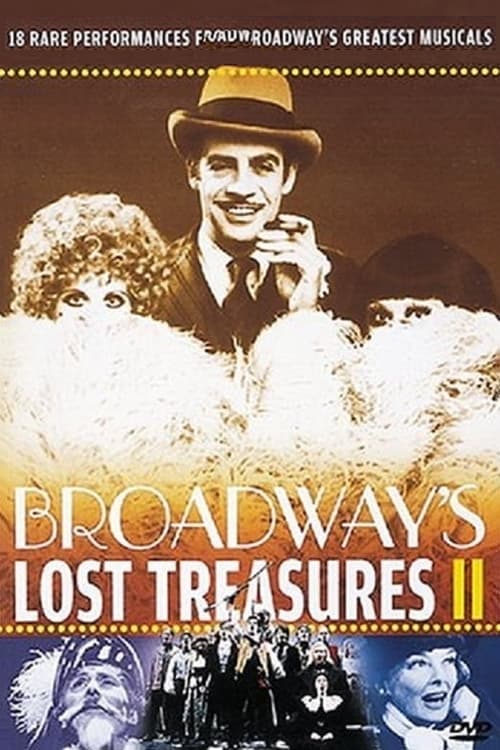
Broadway's Lost Treasures II
2004
No user ratings available yet
Representation score: 3.1 out of 10

Representation Score
Fair
1999
TV-GDirector
William Cosel
Runtime
100 minutes
Average Rating
No ratings yetNew Showbiz Analysis
The documentary serves as a powerful celebration of female excellence, effectively centering women as the primary drivers of the artistic spectacle. By elevating divas to commanding figures, it challenges traditional gendered power dynamics in the musical theater canon. However, the film remains rooted in traditional Western institutions and lacks an explicit focus on LGBTQ+ or neurodivergent narratives. It functions primarily as a preservation of high-culture heritage rather than a tool for social deconstruction. Ultimately, the work provides a meaningful departure from standard ensemble dynamics through its emphasis on female mastery, even while adhering to conventional celebratory structures.
Category Breakdown
The documentary focuses on musical theater legends without delving deeply into same-sex relationships or non-binary gender identities. While the genre is historically connected to queer culture, the film doesn't emphasize these specific identities.
This production centers on women's empowerment by highlighting leading ladies and divas. Performers like Audra McDonald and Liza Minnelli showcase vocal mastery and command, breaking traditional patriarchal hierarchies in theater.
The cast includes accomplished performers from various backgrounds, such as Audra McDonald. This inclusion challenges the historical homogeneity of Broadway archetypes by presenting a more integrated landscape of talent.
The film operates within the framework of Western high art and classical musical theater. It celebrates established institutions like Carnegie Hall rather than seeking to deconstruct Western cultural heritage.
There is no specific evidence regarding the portrayal of visible or invisible disabilities within the performance details provided.
Present on Screen
Limited or Absent
Official Synopsis
On Sept. 28, 1998, some of the greatest divas in musical theater -- including Marin Mazzie, Judy Kuhn and Audra McDonald -- took the stage at New York City's Carnegie Hall to belt out songs that made them famous. Julie Andrews hosted the event. Showstoppers include Liza Minnelli performing "Some People"; Andrea McArdle singing "Look for the Silver Lining" and "Tomorrow"; and Bebe Neuwirth and Karen Ziemba teaming for "Nowadays/Hot Honey Rag." Originally broadcast on PBS's "Great Performances" (season 28, episode 4).
2004
1985

2020

2003

2002
2006
2003
2001
No reviews yet. Be the first to share your thoughts on this movie!
Use the rating form above to leave a star rating and optional review.