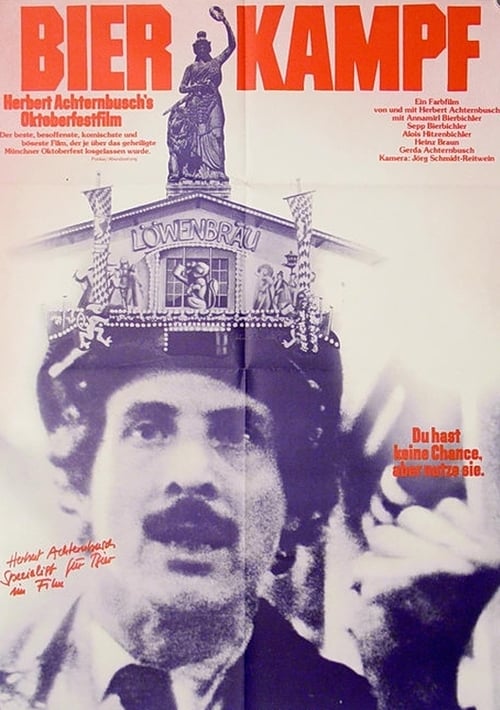
Beer Chase
1977
No user ratings available yet
Diversity score: 5.1 out of 10

1997
Director
Andreas Dresen
Runtime
90 minutes
Average Rating
No ratings yetSynopsis
Inspired by West German terrorists, two pupils kidnap a teacher in East Germany.
Overall Score
Fair
Category Breakdown
LGBTQ+ Representation
The film lacks explicit evidence of LGBTQ+ character arcs or non-heteronormative identities. The narrative focuses on political and social tension rather than identity-based romance.
Gender Representation
The premise of students taking agency over a teacher suggests a potential disruption of traditional classroom hierarchies. However, it remains unclear if female characters possess true agency.
Racial & Ethnic Diversity
Set in East Germany and inspired by West German terrorism, the film likely reflects a homogeneous demographic. There is no evidence of significant racial or ethnic intersectionality.
Religious & Cultural Diversity
The film excels by critiquing the stability of state and educational institutions. It explores youth rebellion and the deconstruction of authority through its central kidnapping plot.
Disability Representation
There is no evidence to suggest that disability, neurodivergence, or chronic illness plays a role in the narrative arc.
Strengths
Areas for Improvement
AI Analysis
Changing Skins functions primarily as a social critique rather than a vehicle for demographic representation. It prioritizes psychological realism and the friction between individuals and their environments over identity-based storytelling. The film's strength lies in its challenge to traditional Western institutional hierarchies and its exploration of situational ethics. It uses a kidnapping plot to examine the rebellion of youth against established societal norms. However, the work lacks significant intersectional markers. The historical and geographical context suggests a lack of racial, ethnic, or LGBTQ+ diversity within the narrative framework.
1977

2025
1993

2005
1999

2022
2019

1992
2004

1969

1997
2017
No reviews yet. Be the first to share your thoughts on this movie!
Use the rating form above to leave a star rating and optional review.