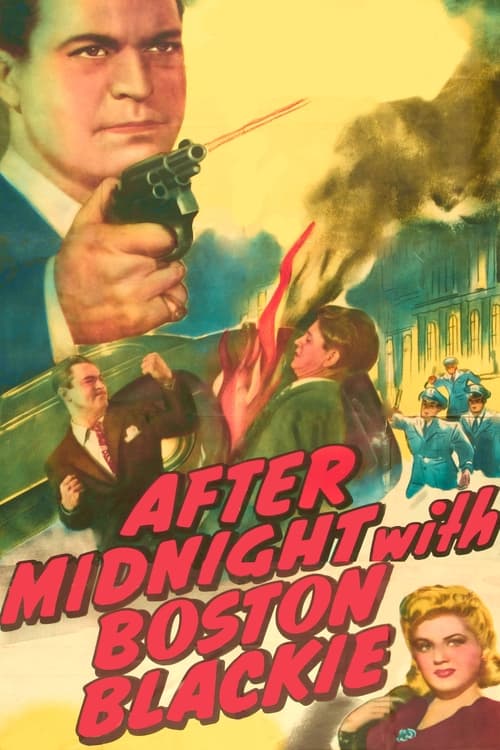
After Midnight with Boston Blackie
1943
No user ratings available yet
Representation score: 1.8 out of 10
Representation Score
Minimal
1946
ApprovedDirector
Lew Landers
Runtime
60 minutes
Average Rating
No ratings yetNew Showbiz Analysis
This mystery functions as a quintessential product of its era, prioritizing genre clichés over the subversion of social hierarchies. The narrative structure relies heavily on traditional masculinity and demographic homogeneity. The film reinforces 1940s social and cultural norms rather than challenging them. It focuses on a standard noir-adjacent mystery that lacks intentionality regarding diverse representation. Ultimately, the work meets the genre requirements but remains a product of a period defined by conventional social roles and limited diversity.
Category Breakdown
The film does not include any LGBTQ+ characters or relationships that go beyond the assumption that everyone is straight. It follows the typical heterosexual norms of 1940s crime comedies.
The story follows mid-century gender roles. The female lead drives the emotional storyline, but her role is primarily reactive and tied to her roles as a wife and mother.
The cast and setting reflect a largely homogeneous demographic typical of 1946 productions. There is no significant racial or ethnic diversity shown.
The story emphasizes a traditional Western moral framework and individual responsibility. It reinforces social stability through the restoration of justice.
There are no visible or invisible disabilities portrayed. All characters are presented as able-bodied, with no engagement with neurodivergence or physical impairment.
Present on Screen
Limited or Absent
Official Synopsis
Blackie runs into a woman he formally loved who now is married with a kid. When her husband gets out of prison he's killed in Blackie's apartment and of course the police thing Blackie pulled the trigger. Blackie must set out to prove his innocence as well as capture the real killers.
1943

1956
1941
1947
1945
1946
1945
1942
No reviews yet. Be the first to share your thoughts on this movie!
Use the rating form above to leave a star rating and optional review.