
You Are in Love
1988
No user ratings available yet
Representation score: 1.1 out of 10
Representation Score
Minimal
1975
Director
Hulki Saner
Runtime
74 minutes
Average Rating
No ratings yetNew Showbiz Analysis
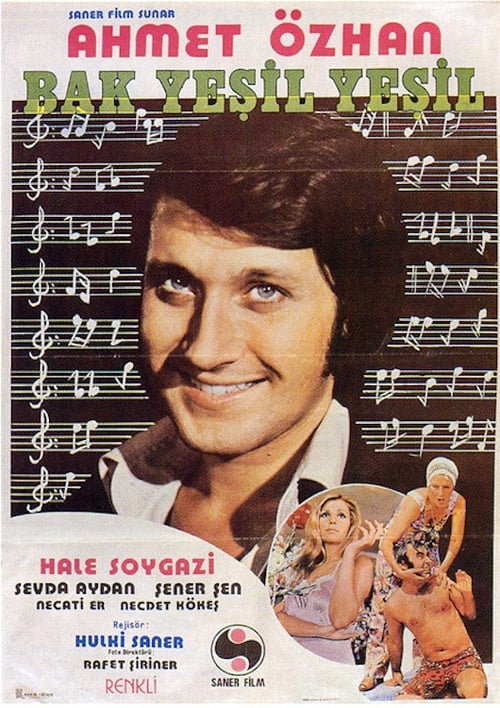
Bak Yeşil Yeşil Yeşil is a 1975 Turkish comedy centered on a pop singer navigating romantic themes. The film follows traditional narrative structures typical of its era, avoiding progressive identity politics. While the film includes prominent female roles, it does not challenge social hierarchies. Instead, it aligns with the cultural and social norms of 1970s Turkish cinema. Overall, the film lacks representation of LGBTQ+ identities, disability inclusion, or ethnic diversity, reflecting its conventional context.
Category Breakdown
The film does not include any characters with LGBTQ+ identities or critique heteronormativity. It focuses on a singer in love without addressing queer perspectives.
The film features prominent female roles played by Hale Soygazi and Sevda Aydan. However, it likely adheres to traditional gender stereotypes typical of 1970s commercial comedies.
The movie centers on a specific Turkish ethnic and national identity without showing intentional ethnic mixing or color-blind casting.
The story operates within the conventional social norms of mid-1970s Turkey, with no apparent subversion of religious or family institutions.
There is no mention of characters with physical or neurodivergent disabilities in the film’s records.
Present on Screen
Limited or Absent
Official Synopsis
Story of a singer who is in love..
1988
1977
1975

1977

1985

1972
1975
1977
No reviews yet. Be the first to share your thoughts on this movie!
Use the rating form above to leave a star rating and optional review.