Unexpected Father
1939
No user ratings available yet
Representation score: 2.0 out of 10
Representation Score
Minimal
1937
PassedDirector
Christian-Jaque
Runtime
90 minutes
Average Rating
No ratings yetNew Showbiz Analysis
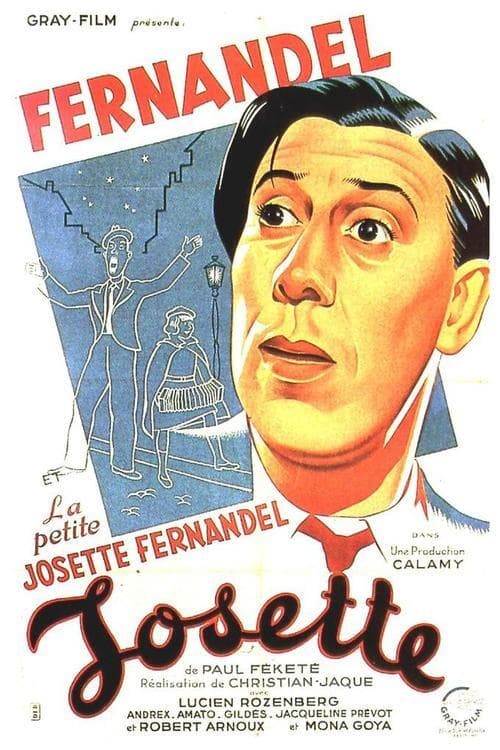
Josette opens in the warm, claustrophobic interior of a bourgeois French home, where the camera lingers on Fernandel’s expressive face as the primary vehicle for humor. The film sells a vision of domestic stability where the husband’s ego and professional incompetence are the source of comedy, but his moral worth is secured by his return to the household. The sold meaning is clear: the traditional nuclear family is the ultimate reward, and the wife’s role is to provide the emotional anchor that allows the man to succeed. The film’s argument is that social mobility and personal happiness are achieved through benevolent patronage and the restoration of conventional gender roles. Albert, who cannot keep a job because he hums, is rescued by a millionaire who recognizes his talent. This external validation allows him to marry Jeanne and adopt their daughter, Josette. The ending is a moral verdict that affirms the status quo: the house is restored, the marriage is secured, and the servant remains in the background. The contradictions in this argument are minimal, as the film does not challenge the structures it depicts. The camera loves the domestic order, treating the home as a sanctuary from the chaos of the outside world. The joke is Albert’s self-perception, but the punchline is the restoration of his authority as the head of the household. The film is a gentle, conventional comedy that reinforces the values of the era, offering no critique of the class or gender dynamics it presents.
Category Breakdown
The narrative centers exclusively on the heterosexual marriage between Albert and Jeanne. No queer characters, intimacy, or identity are depicted or discussed.
Albert is the comedic protagonist whose singing career drives the plot, while Jeanne is the stable domestic partner who recovers from illness to marry him. The ending rewards the restoration of the nuclear family unit.
Joe Alex appears as "Bamboula, le domestique," a Black servant in a functional background role. He has no interiority or agency, serving only to mark the household's class status.
The film treats the middle-class French home, earned wealth, and stable marriage as the ideal moral endpoint. The millionaire’s help is a benevolent gift that secures Albert’s traditional domestic life.
Jeanne’s illness is a plot device requiring a sanitarium stay, but it is not explored as a lived experience. No characters with ongoing disabilities are present.
Present on Screen
Limited or Absent
Official Synopsis
Albert Durandal is unable to keep a job for more than a few days. The reason: he hums while working, which invariably irritates his superiors. He is not hired as a singer for all that, as no music producer is prepared to bet on him. At the moment he is as free as a (singing) bird and accepts to take care of Josette, the little daughter of Jeanne, his neighbor, who is sick and has to go to a sanitarium. One day, while walking down the street, he helps an old man who has an attack. The latter happens to be an influential millionaire. And with a heart of gold into the bargain : he helps Albert to make it in the singing career. And as Jeanne has recovered, he can marry her and adopt Josette.
1939
1916

1939

1949
1957

1950

1941
1936
No reviews yet. Be the first to share your thoughts on this movie!
Use the rating form above to leave a star rating and optional review.