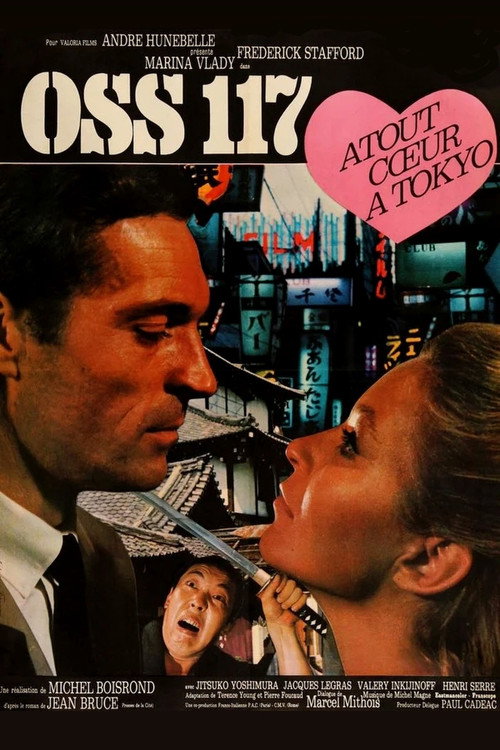
O.S.S. 117: Mission to Tokyo
1966
No user ratings available yet
Representation score: 3.2 out of 10
Representation Score
Limited
1966
Director
Manfred R. Köhler
Runtime
93 minutes
Average Rating
No ratings yetNew Showbiz Analysis
This Eurospy thriller is a quintessential product of its era, prioritizing genre clichés over social complexity. It reinforces mid-century status quo through its casting and traditional power dynamics. The film relies on Western-centric espionage narratives, positioning international intelligence agencies as the primary defenders of order. This framework limits the ability to act of local characters and cultural nuances. Characterization often uses physical differences or ethnic backgrounds as mere plot devices. The film functions as escapist entertainment rather than a meaningful exploration of diverse identities.
Category Breakdown
The film follows a typical 1960s Eurospy template with heterosexual romance. There is no representation of LGBTQ+ identities or same-sex relationships.
Female characters are often placed in high-status positions but mainly serve as plot catalysts or romantic foils. The narrative centers on traditional male leadership through Agent Richard Blake.
The cast is predominantly European despite the Beirut setting. The Sheikh is portrayed as a traditional villainous figure rather than a nuanced exploration of his ethnic identity.
The story operates within a Western-centric framework where Interpol is the protector of order. It lacks meaningful engagement with local cultural nuances.
There is no representation of physical or neurodivergent disabilities. The Sheikh's missing finger is used as a visual shorthand for villainy rather than a lived experience.
Present on Screen
Limited or Absent
Official Synopsis
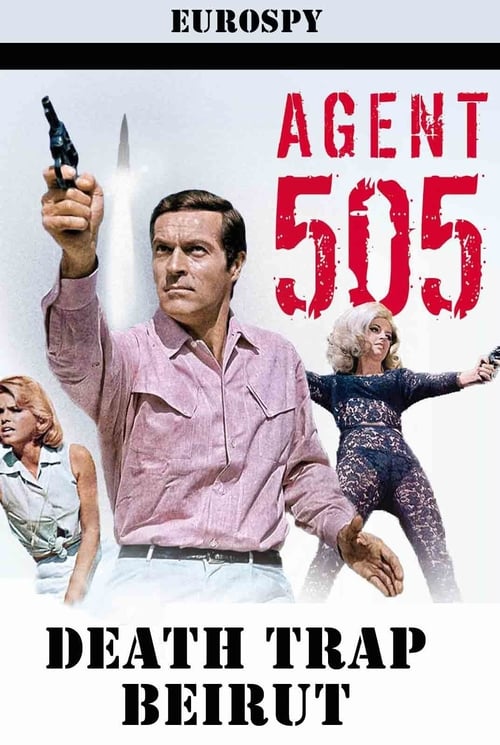
A couple of beautiful girls are murdered while sunbathing at a luxury hotel. The killer too is murdered, but able to reveal – before dying - that they were disposed of because the “knew too much”. Something bad is being planned in Beirut, and it has something to do with a man called The Sheikh, who has only four fingers. It seems this isn’t a lone incident. The Sheikh is also thought to be behind the assassination of several prominent scientists.
1966
1973
1956
1965
1966
1972
1968
1981
No reviews yet. Be the first to share your thoughts on this movie!
Use the rating form above to leave a star rating and optional review.