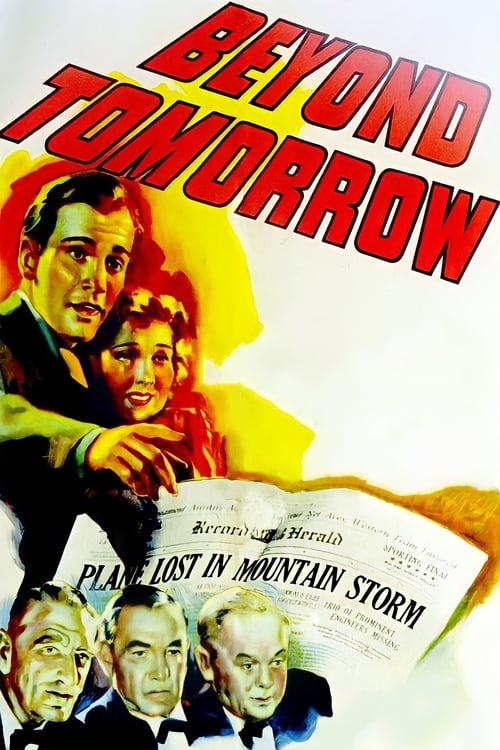
Beyond Tomorrow
1940
No user ratings available yet
Diversity score: 1.3 out of 10

1933
NRDirector
Gregory La Cava
Runtime
86 minutes
Average Rating
No ratings yetSynopsis
A political hack becomes President during the height of the Depression and undergoes a metamorphosis into an incorruptible statesman after a near-fatal accident.
Overall Score
Minimal
Category Breakdown
LGBTQ+ Representation
The film adheres strictly to 1930s social constraints. There is no depiction of non-cisnormative identities or same-sex intimacy.
Gender Representation
Power and central conflict are almost exclusively male-driven. Female characters remain peripheral and lack significant agency within the political drama.
Racial & Ethnic Diversity
The cast is overwhelmingly white and Anglo-Saxon. There is a notable absence of characters from diverse ethnic backgrounds.
Religious & Cultural Diversity
The story uses heavy religious symbolism to justify autocratic rule. It critiques corrupt Western institutions by suggesting democratic processes are insufficient.
Disability Representation
There is no representation of physical or neurodivergent disabilities. The protagonist's transformation is purely spiritual and political.
Strengths
Areas for Improvement
AI Analysis
This 1933 drama focuses on a political metamorphosis during the Great Depression, but it lacks intersectional representation. The narrative is built around a white, male-dominated hierarchy that reflects the era's narrow demographic focus. While the film fails to include diverse identities, it offers a sophisticated critique of institutional authority. It portrays the existing political machinery as corrupt and ineffective, suggesting that traditional democratic checks must be bypassed to achieve social salvation. Ultimately, the film functions as a study of autocratic efficiency. It uses divine intervention to sanction a shift in power, prioritizing systemic overhaul over modern progressive frameworks or inclusive storytelling.
1940
1951

1945

1971
No reviews yet. Be the first to share your thoughts on this movie!
Use the rating form above to leave a star rating and optional review.