
Unknown: Killer Robots
2023
No user ratings available yet
Diversity score: 5.5 out of 10
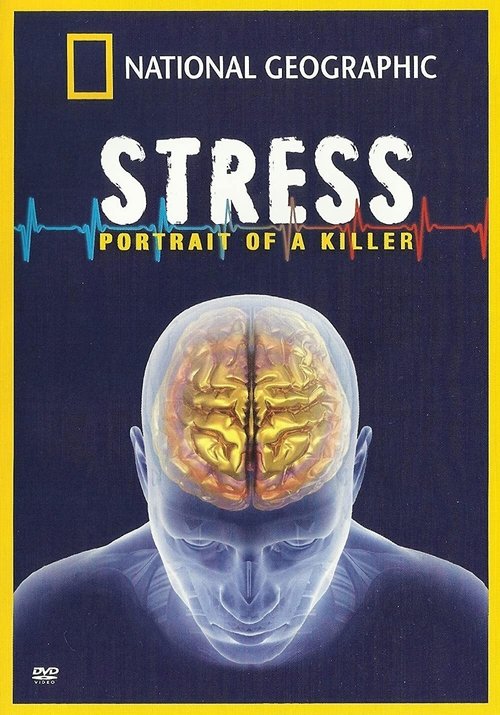
2008
Director
John Heminway
Runtime
56 minutes
Average Rating
No ratings yetSynopsis
Over the last three decades, science has been advancing our understanding of stress: how it impacts our bodies and how our social standing can make us more or less susceptible. From baboon troops on the plains of Africa, to neuroscience labs at Stanford University, scientists are revealing just how lethal stress can be. Research tells us that the impact of stress can be found deep within us, shrinking our brains, adding fat to our bellies, even unraveling our chromosomes. Understanding how stress works can help us figure out ways to combat it and how to live a life free of the tyranny of this contemporary plague. In Stress: Portrait of a Killer, scientific discoveries in the field and in the lab prove that stress is not just a state of mind, but something measurable and dangerous.
Category Breakdown
The documentary focuses on physiological and neurological data across species. It lacks LGBTQ+ characters or narratives regarding non-cisnormative identities, maintaining a neutral, clinical stance.
The film presents stress as a universal biological experience. It avoids reinforcing traditional masculine leadership by focusing on shared human vulnerabilities like brain shrinkage and chromosomal changes.
A globalized perspective is achieved by moving from African plains to American laboratories. However, the scientific focus means it does not actively engage in intentional identity blending.
The narrative critiques socioeconomic hierarchies by linking social standing to stress susceptibility. It prioritizes empirical, scientific data over traditional or religious explanations for human suffering.
The film explores how external pressures physically alter human biology. While it doesn't frame these changes through the lens of identity, it avoids using disability as a plot device.
Strengths
Areas for Improvement
Score Reasoning
Stress: Portrait of a Killer operates as a clinical examination of biological vulnerability rather than a character-driven social narrative. Its primary goal is the scientific documentation of how stress impacts the body and brain. The film achieves a degree of breadth by utilizing a cross-cultural approach, spanning from Africa to US-based laboratories. This provides a globalized perspective on the biological mechanics of stress. Ultimately, the documentary lacks intentional identity-driven storytelling. It provides a subtle critique of societal structures by highlighting how social standing influences biological outcomes, yet it remains rooted in empirical data.
2023
2024

2014
2018

2019
2006

2004

2024
2017
2026

2024

2022
No reviews yet. Be the first to share your thoughts on this movie!
Use the rating form above to leave a star rating and optional review.