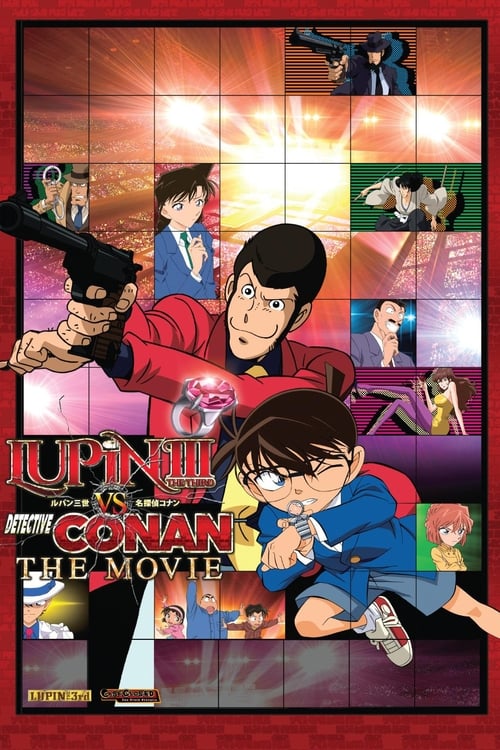
Lupin the Third vs. Detective Conan: The Movie
2013
No user ratings available yet
Diversity score: 2.3 out of 10

2009
PG-13Director
Hajime Kamegaki
Runtime
104 minutes
Average Rating
No ratings yetSynopsis
When a wealthy woman and her son die in a hunting accident, it's up to Conan Edogawa to solve the case. Meanwhile, Lupin the Third is after the Queen Crown, owned by the Vesparand royal family. When these two legendary characters meet, who will win the day?! Followed by “Lupin the Third vs. Detective Conan: The Movie” (2013).
Overall Score
Limited
Category Breakdown
LGBTQ+ Representation
The film focuses on established character archetypes from its respective franchises. There is no evidence of non-cisnormative identities or narratives that critique heteronormativity.
Gender Representation
While female characters like Ran Mouri show physical capability, the narrative is driven by male protagonists. The film reinforces conventional archetypes like the gentleman thief and brilliant detective.
Racial & Ethnic Diversity
The character composition is overwhelmingly homogeneous, reflecting the Japanese origins of the source material. It does not utilize diverse ethnic ensembles to challenge the status quo.
Religious & Cultural Diversity
The story uses the gentleman thief trope to frame criminal actions through personal honor. However, it lacks a critique of Western institutions or traditional family structures.
Disability Representation
There is no significant presence of characters with visible or invisible disabilities. The narrative does not engage with neurodivergence or physical disability as central themes.
Strengths
Areas for Improvement
AI Analysis
This crossover event prioritizes the stylistic synergy of two legendary properties over progressive narrative architecture. It functions as a genre-blending spectacle rather than a vehicle for social critique. The film adheres to traditional character archetypes and maintains a culturally homogeneous landscape. While characters operate outside legal authority, this is a staple of the adventure genre rather than a deconstruction of systemic power. Ultimately, the work leans into established tropes of heist and mystery, offering little in the way of intersectional representation or subversion of social hierarchies.
2013

2012
2006
No reviews yet. Be the first to share your thoughts on this movie!
Use the rating form above to leave a star rating and optional review.