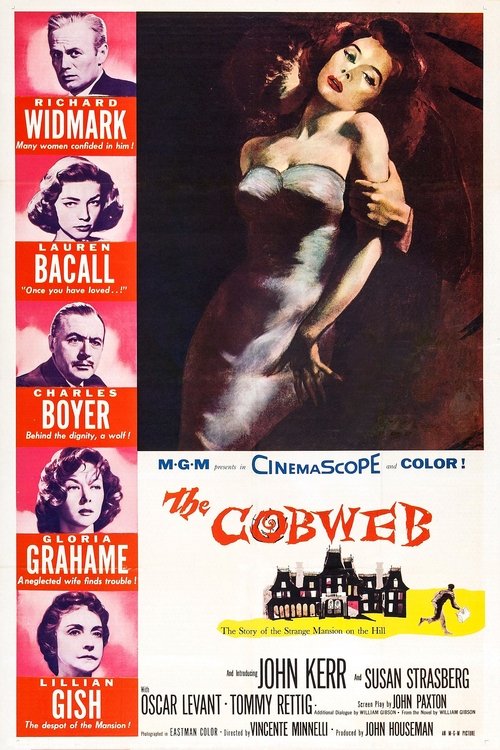
The Cobweb
1955
No user ratings available yet
Diversity score: 4.0 out of 10

1956
ApprovedDirector
Vincente Minnelli
Runtime
122 minutes
Average Rating
No ratings yetSynopsis
A sensitive young man recalls his time in boarding school when the only person who seemed compassionate towards him was his housemaster's wife.
Overall Score
Limited
Category Breakdown
LGBTQ+ Representation
The film operates within rigid social frameworks, focusing on traditional romantic dynamics. It lacks explicit LGBTQ+ characters or non-heteronormative identities.
Gender Representation
Female characters provide essential emotional scaffolding for the male protagonists. However, agency is largely confined to domestic or supportive roles within mid-century archetypes.
Racial & Ethnic Diversity
The setting reflects a homogeneous, upper-middle-class Western social circle. There is a notable lack of racial intersectionality or intentional casting diversity.
Religious & Cultural Diversity
The story explores the friction between individual sensibility and rigid institutional expectations. It frames these struggles as personal journeys rather than systemic critiques.
Disability Representation
The protagonist's sensitivity suggests a study of psychological vulnerability. However, these traits function more as character temperament than a formal exploration of disability.
Strengths
Areas for Improvement
AI Analysis
Vincente Minnelli’s drama is a sophisticated study of psychological interiority, yet it remains firmly rooted in the social constraints of its era. The film prioritizes individual emotional growth over the disruption of systemic hierarchies. While the narrative offers a nuanced look at emotional labor, it does not challenge the status quo regarding race, gender, or sexuality. It functions as a period piece that reflects, rather than critiques, the exclusivity of its setting.
1955

1956

1951

1965
1952

1946

1956

1952

1956

1961

1946

1950
No reviews yet. Be the first to share your thoughts on this movie!
Use the rating form above to leave a star rating and optional review.