
Not Now, Comrade
1976
No user ratings available yet
Representation score: 3.0 out of 10
Representation Score
Minimal
1968
GDirector
Gordon Flemyng
Runtime
99 minutes
Average Rating
No ratings yetNew Showbiz Analysis
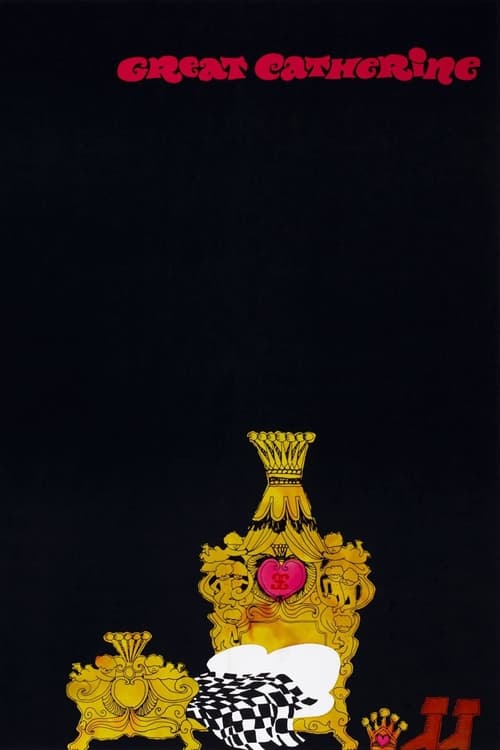
Great Catherine is a traditional 1960s period comedy that emphasizes escapist romantic stories over diverse representation. While Catherine's role as a monarch provides a degree of female empowerment, the film remains rooted in the social structures of its time. The narrative lacks racial and LGBTQ+ diversity, presenting a homogeneous portrayal of the aristocracy. It serves as a light-hearted look at history without addressing systemic issues. Overall, the film adopts a traditional approach to historical filmmaking, focusing on courtly intrigue and conventional gender roles.
Category Breakdown
The film does not include any LGBTQ+ characters or explore non-traditional gender identities. The plot focuses on heterosexual relationships and traditional romance.
Catherine is represented as a powerful monarch with significant influence in a male-dominated world. However, her authority is often expressed through romantic relationships and comedic situations.
The cast is primarily composed of white, European actors, reflecting a traditional interpretation of the Russian Imperial Court. There is no representation of diverse ethnicities.
The film uses the Russian Orthodox setting as a backdrop for historical entertainment. It avoids criticizing religious institutions and focuses on the comedic and celebratory aspects of aristocratic life.
The film does not depict any characters with disabilities, either visible or invisible. Social status is the primary characteristic of the characters, not neurodivergence or physical conditions.
Present on Screen
Limited or Absent
Official Synopsis
When British Capt. Charles Edstaston arrives at the court of Catherine the Great in St. Petersburg, Russia, he is stunned by the palace's disorderly condition. The severely intoxicated Prince Potemkin concludes that the handsome Edstaston would be a suitable lover for Catherine, and he coerces the bewildered visitor into her bedchamber. Edstaston manages to escape, but he is repeatedly recaptured and delivered to the mischievous Catherine.
1976

1964
1969
1955
1973
1996
1945
1957
No reviews yet. Be the first to share your thoughts on this movie!
Use the rating form above to leave a star rating and optional review.