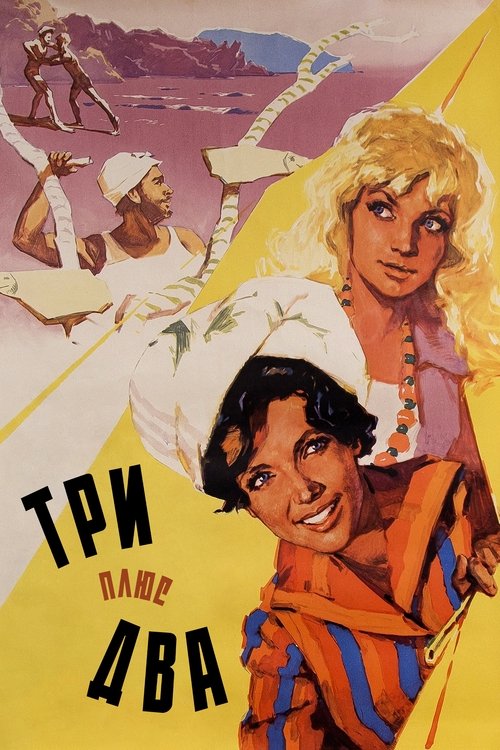
Three Plus Two
1963
No user ratings available yet
Representation score: 3.5 out of 10
Representation Score
Minimal
1957
ApprovedDirector
Mark Robson
Runtime
90 minutes
Average Rating
No ratings yetNew Showbiz Analysis
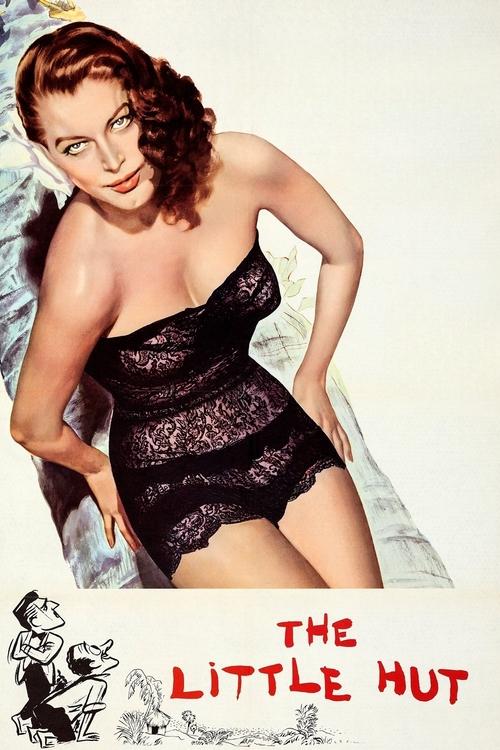
The Little Hut is a quintessential product of its era, focusing on mid-century domestic and romantic norms. The narrative structure prioritizes traditional social cohesion and conventional character archetypes over exploring diverse identities. Operating within a closed social environment, the film lacks the intentionality needed to challenge established hierarchies. It relies on a traditional heterosexual triangle to drive its comedic elements, offering little space for diverse perspectives. Ultimately, the film reinforces the social stability and decorum expected in 1950s studio-era filmmaking.
Category Breakdown
The film does not include any non-straight or non-cisgender identities. There is no depiction of same-sex relationships or non-binary gender identities.
The female lead is a central figure of desire, but her role is defined by her marriage. Gender dynamics rely on traditional male competition rather than challenging male dominance.
The cast is primarily white, reflecting the demographic homogeneity of mid-century British cinema. The island setting emphasizes a singular, Anglo-Saxon social perspective.
The story focuses on traditional Western social norms and romantic structures. It does not engage with broader systemic critiques or cultural diversity.
All characters are portrayed as fully able-bodied. There are no stories involving neurodivergence or chronic illness.
Present on Screen
Limited or Absent
Official Synopsis
Sir Philip Ashlow (Stewart Granger), his neglected wife, Lady Ashlow (Ava Gardner) and his best friend Henry Brittingham-Brett (David Niven) are shipwrecked on a desert island. This potential ménage à trois where the two men compete for the lady's attention is interrupted by the unexpected arrival of a fourth inhabitant of the island.
1963

1952
1944
1948
1961
1955
1952

1940
No reviews yet. Be the first to share your thoughts on this movie!
Use the rating form above to leave a star rating and optional review.